

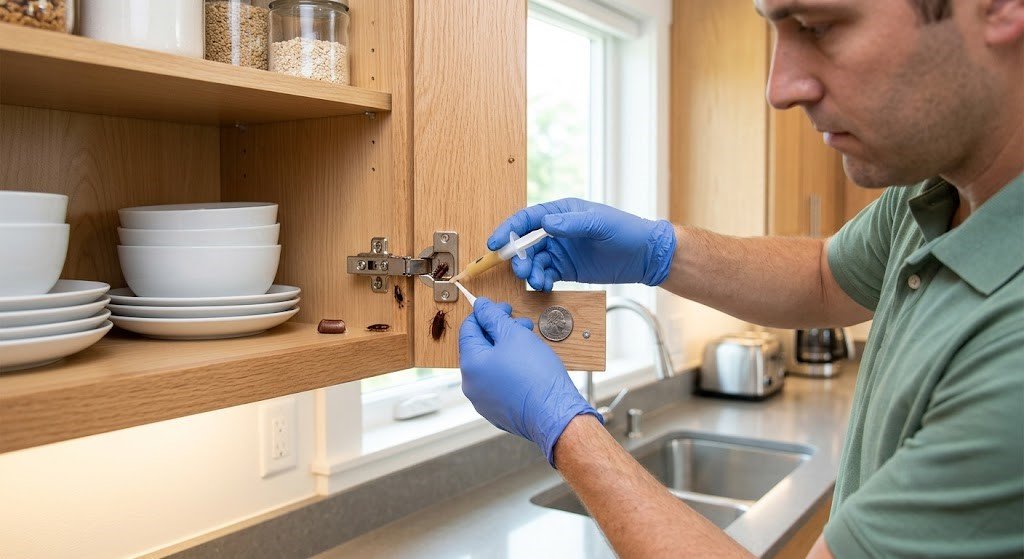
Few things are more frustrating than opening a kitchen cabinet to grab a coffee mug or dinner plate and spotting a cockroach scuttling into the dark shadows. Kitchens are the primary battlefield for home pest control because they offer everything cockroaches need to survive: moisture, heat, food residue, and endless hidden harbourage points.
If you want to protect your food preparation spaces, eliminating roaches in cabinets and major appliances requires a systematic, multi-step approach rather than just spraying aerosol pesticides randomly. In this guide, you will learn how to locate hidden cockroach harborages, apply targeted treatments safely around cookware, and prevent re-infestation for good.
Key Takeaways
- Deep Clean First: Empty all cabinets and clean up crumbs, grease films, and food spills before applying any pest control products.
- Target Hotspots: Focus on warm, dark areas near heat-generating appliances (refrigerators, dishwashers, microwaves) and cabinet hinges or corners.
- Use Gel Baits & IGRs: Avoid broad-spectrum sprays near cookware; instead, deploy gel bait droplets and Insect Growth Regulators (IGRs) into crack-and-crevice hiding spots.
- Seal Access Points: Block entryways around plumbing penetrations, backsplash gaps, and wall voids using 100% silicone caulk and fine stainless steel mesh.
Why Roaches Nest in Kitchen Cabinets & Appliances
To successfully banish cockroaches from your kitchen, you must understand why they congregate in these specific locations. Kitchen cabinets, especially those near sinks and cooking stoves, provide ideal microclimates.
Primary Drivers of Kitchen Infestations
- Unrestricted Access to Water: Leaking pipe joints under the kitchen sink create moisture reservoirs that attract adult roaches and nymphs.
- Abundant Food Sources: Microscopic grease splatters, unsealed cardboard food packaging, and neglected crumbs beneath appliances offer a continuous feast.
- Warmth from Appliances: Motors in refrigerators, dishwashers, and ovens generate constant ambient heat, making wall voids behind them ideal breeding zones.
- Tight Crack Protection: Cockroaches are thigmotactic, meaning they prefer tight spaces where their backs touch both upper and lower surfaces simultaneously.
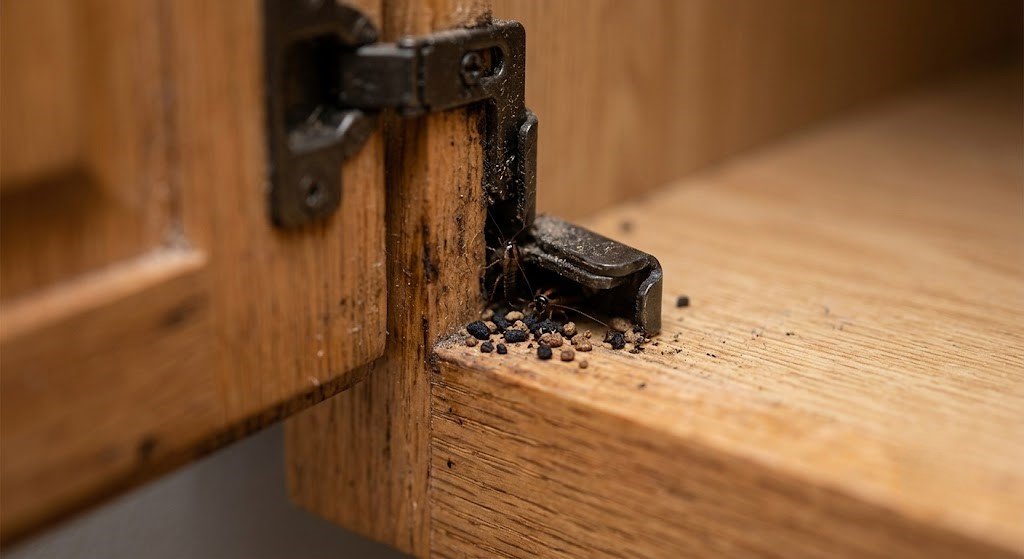
Step-By-Step Plan for Eliminating Roaches in Cabinets
When dealing with cabinet infestations, safety is paramount because these spaces house your dishes, glassware, and dry food storage. Follow this organized workflow to clean and treat cabinet spaces safely.
Step 1: Empty and Inspect Every Shelving Unit
Remove every plate, pantry item, and utensil from the affected cabinets. Throw away any open cardboard food packages that show signs of damage, chew marks, or pest droppings.
[Internal Link: Insert relevant internal URL here with anchor text: “Learn how to spot roach egg cases & baby roach ID in pantry corners”]
Step 2: Vacuum and Disinfect
Using a vacuum equipped with a hose attachment and a HEPA filter, thoroughly clean all interior shelf corners, cabinet hinges, and wall seams to remove eggs, shed skins, and droppings. Follow up by wiping down all hard surfaces with warm soapy water or a mild disinfectant. Avoid heavy scented cleaners immediately before baiting, as strong chemical odors can repel pests from consuming baits.
Step 3: Strategic Gel Baiting & IGR Application
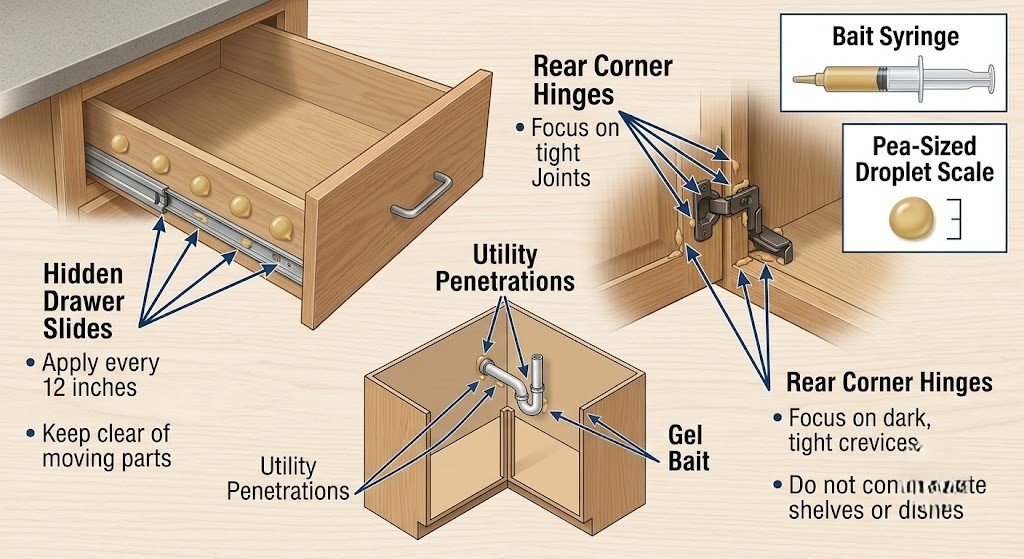
The most effective strategy for eliminating roaches in cabinets involves placing targeted gel baits where pests travel.
- Dose Size: Apply small, pea-sized dots of gel bait every 12 to 18 inches along inner cabinet corners, drawer slides, and behind hinge plates.
- Avoid Food Contact Areas: Never place bait on open shelf surfaces where food or eating utensils directly sit. Keep applications strictly inside cracks and crevices.
- Add an IGR: Combine gel baits with an Insect Growth Regulator (IGR) disc or liquid spray in cabinet voids to break the reproductive cycle of surviving nymphs.
[External Link: Insert high-authority external URL here with anchor text: “Read university extension research on cockroach baiting techniques and resistance management”]
Clearing Roaches From Kitchen Appliances
Appliances represent the second half of the kitchen pest puzzle. Refrigerators, dishwashers, and microwaves provide heat and hidden moisture that keep cockroach colonies thriving behind the scenes.
Appliance Treatment Protocols
| Appliance | Common Harborage Area | Best Treatment Method |
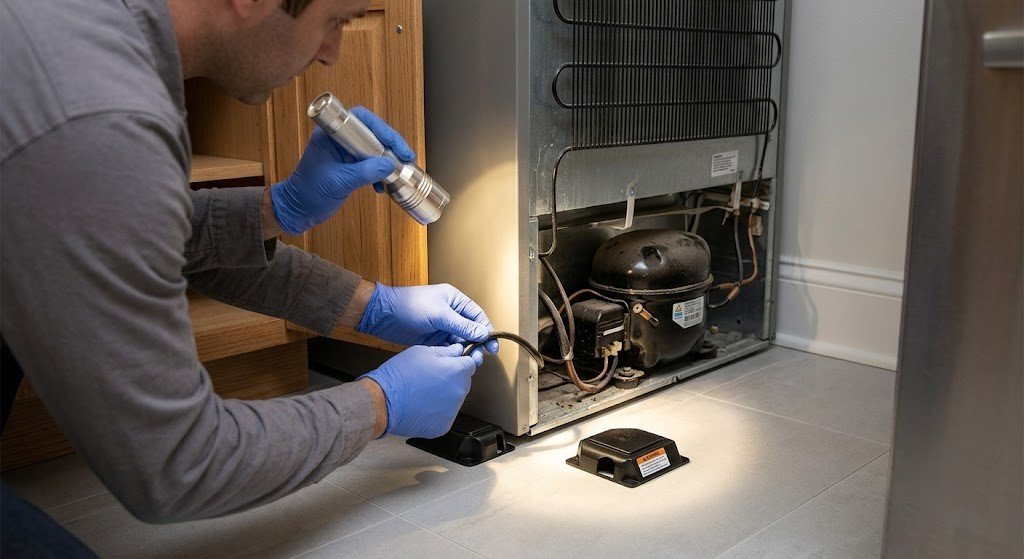
| Refrigerator | Rear motor compressor coil & drip pan | Vacuum coils; place bait stations beneath/behind the unit. |
| Dishwasher | Lower kickplate panel & insulation lining | Remove kickplate; apply IGR discs and gel bait in dry motor voids. |
| Microwave / Ovens | Bottom ventilation grilles & rear panels | Apply gel bait to outer rear housing seams; keep bait away from heating elements. |
| Toasters / Coffee Makers | Crumb trays & water reservoirs | Clean crumb trays daily; unplug and store in sealed containers if infested. |
Long-Term Prevention: Keeping Cabinets Roach-Free
Once you have completed the process of eliminating roaches in cabinets, shift your focus toward long-term exclusion and sanitation practices.
- Seal All Cracks and Crevices: Apply 100% silicone caulk around cabinet backings, backsplash gaps, and plumbing cutouts under the sink.
- Switch to Airtight Containers: Store flour, rice, cereal, and sugar in hard plastic or glass containers with rubber seals instead of original cardboard boxes.
- Fix Plumbing Leaks Promptly: Repair dripping faucets or leaking sink traps immediately to eliminate standing water.
- Maintain Nightly Kitchen Hygiene: Wipe down countertops, sweep floors, wash all dishes, and empty the trash bin every night before turning off the lights.
Conclusion
Successfully eliminating roaches in cabinets and appliances requires a combination of deep sanitation, targeted crack-and-crevice baiting, and sealing entry points. By removing food sources and applying gel baits along with insect growth regulators in hidden harborage spots, you can eliminate the existing colony and enjoy a clean, pest-free kitchen.
Frequently Asked Questions (FAQs)
Is it safe to put roach bait inside food cabinets?
Yes, provided you apply gel bait strictly into hidden cracks, crevices, and cabinet hinges rather than open shelf surfaces where food containers or dishes rest. Always follow label directions for indoor kitchen use.
Why do roaches keep coming back to my kitchen cabinets?
Roaches often return if water sources (like leaking pipes under the sink) persist or if gaps around wall pipes and cabinet backings remain unsealed, allowing pests to migrate from neighboring wall voids.
How long does it take to eliminate roaches in cabinets using gel bait?
You will typically see a significant reduction in roach activity within 3 to 7 days after applying gel bait. Complete colony elimination usually takes 2 to 4 weeks as the bait transfers throughout the nest.