

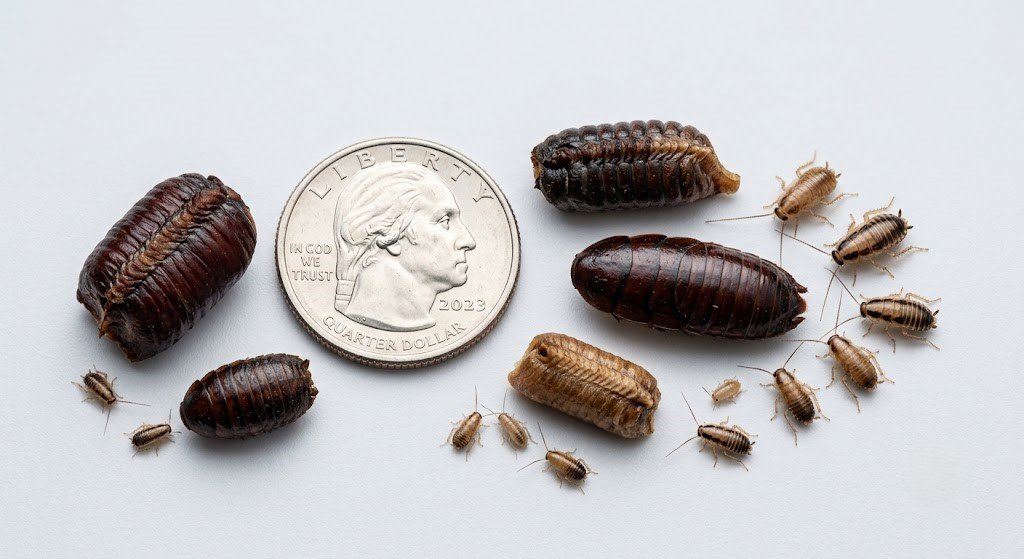
Finding small, dark capsule-like objects or tiny wingless bugs scuttling across your kitchen counter can be alarming. When dealing with household pests, early detection relies heavily on accurate roach egg cases & baby roach ID. Identifying these early life stages—known scientifically as oothecae (egg cases) and nymphs (baby roaches)—allows you to eliminate infestations before hundreds of new pests mature and multiply.
In this guide, you will learn how to identify cockroach egg cases, distinguish baby roaches from look-alike bugs, and take effective action to clear your home.
Key Takeaways
- Ootheca Structure: Cockroach egg cases (oothecae) are hard, capsule-shaped structures containing anywhere from 16 to 50 eggs, depending on the species.
- Nymph Identification: Baby roaches resemble adult roaches but are smaller, lighter or darker in color, and completely lack fully developed wings.
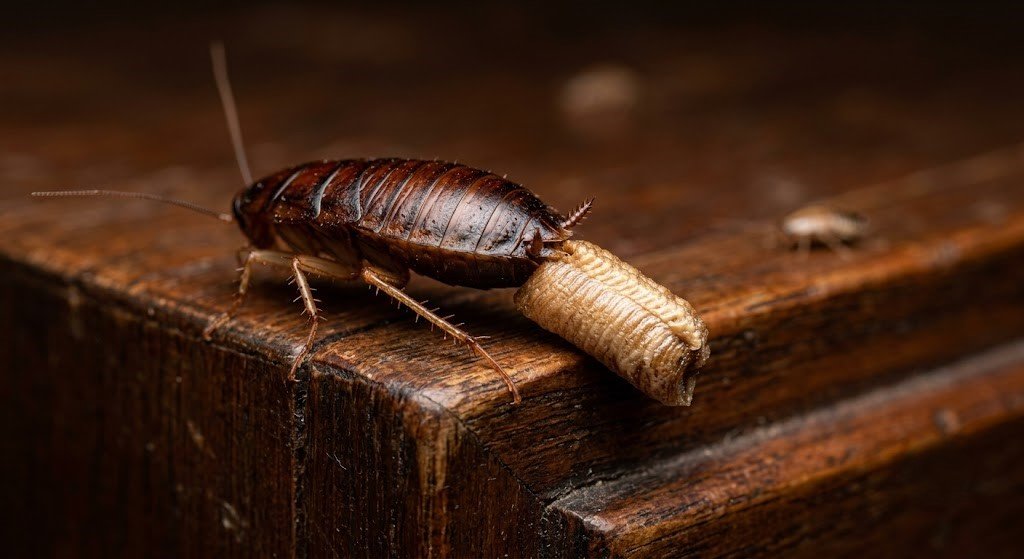
- Key Species Differences: German roach egg cases are light brown and carried by the female until hatching, while American and Oriental egg cases are dark mahogany or black and glued to hidden surfaces.
- Rapid Action Required: Finding a single egg case or nymph usually indicates a breeding nest nearby that requires immediate treatment with insect growth regulators (IGRs) and targeted bait.
What Does a Roach Egg Case Look Like?
Cockroaches do not lay individual, soft-shelled eggs like many other insects. Instead, female roaches produce a protective, hardened protein capsule called an ootheca (plural: oothecae).
Key Physical Features of Roach Egg Cases
- Shape: Purse-shaped, pill-shaped, or bean-like capsules with a distinct ridged seam running along one side.
- Size: Generally ranges from 5 mm to 10 mm in length (roughly the size of a grain of rice or a small bean).
- Color: Varies from light tan/amber to deep reddish-brown or shiny dark mahogany.
Comparing Egg Cases by Species
| Roach Species | Egg Case Color | Length | Eggs Per Capsule | Placement Habit |
| German Cockroach | Light brown / tan | 7–9 mm | 30–40 eggs | Carried by female until 1–2 days before hatching |
| American Cockroach | Dark reddish-brown | 8–10 mm | 14–16 eggs | Glued to dark, moist, protected surfaces |
| Oriental Cockroach | Dark brown / black | 10–12 mm | 16 eggs | Dropped near debris or food sources |
| Smokybrown Cockroach | Dark mahogany / black | 9–14 mm | 20–26 eggs | Attached to mulch, bark, or high-humidity corners |
Baby Roach ID: How to Recognize Cockroach Nymphs
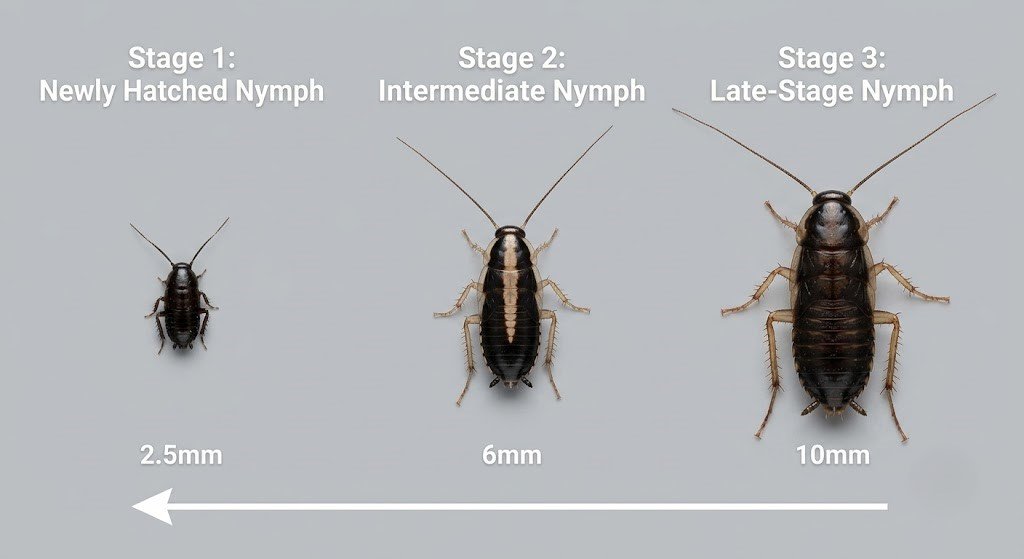
Once the eggs inside an ootheca hatch, out come nymphs—immature baby roaches. Nymphs undergo several molting stages (instars) before becoming full-grown adults.
Key Characteristics of Roach Nymphs
- No Wings: Nymphs cannot fly. While older nymphs may develop small wing pads, functional wings only appear after their final molt.
- Distinct Markings: Many species feature unique band patterns across their thorax that fade or change as they mature.
- Behavior: Nymphs are extremely fast and nocturnal. Finding them during daylight hours often signals high population density and severe crowding in nearby harbourage spots.
Species-Specific Baby Roach Identification
- German Cockroach Nymph: Dark brown to black body featuring a distinctive light tan or yellow stripe running down the center of its back. Newly hatched nymphs are as small as a pinhead.
- American Cockroach Nymph: Greyish-brown at hatching, turning reddish-brown as they mature. Their thoracic segments often display halo-like pale borders.
- Oriental Cockroach Nymph: Reddish-brown when young, darkening to a uniform glossy, dark brown or pitch black in later instars.
- Brown-Banded Cockroach Nymph: Easily recognized by two prominent light-colored transverse bands across the torso.
Bugs That Look Like Baby Roaches
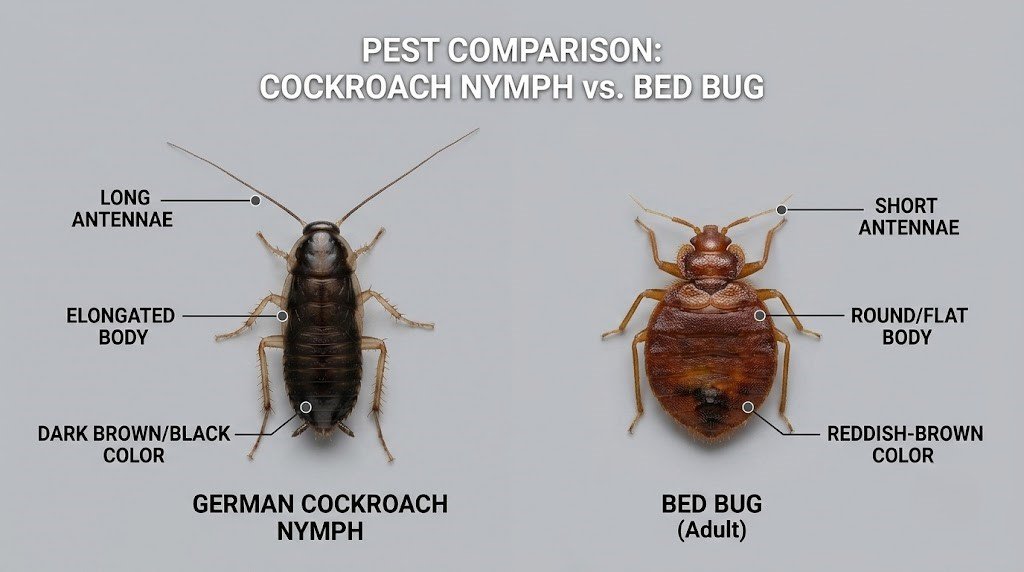
Before starting a pest control treatment, confirm that the bug you found is actually a roach nymph. Several common household insects closely mimic baby roaches:
- Bed Bugs: Smaller, flatter, reddish-brown, and seed-shaped. Unlike roach nymphs, bed bugs have shorter antennae and rounder bodies.
- Carpet Beetle Larvae: Oval-shaped with visible bristles or hairs along the body.
- Ground Beetles: Hard outer wing covers (elytra) meeting in a straight line down the back, which roach nymphs lack.
- Booklice: Tiny, pale, semi-translucent bugs often found near moisture or moldy paper.
Where to Search for Roach Egg Cases & Nymphs
Cockroaches prefer warm, dark, humid environments close to food and water sources. To inspect for breeding activity:
- Kitchen Appliances: Inspect under and behind refrigerators, microwaves, dishwashers, and ovens.
- Cabinets and Drawers: Look inside cabinet hinges, drawer slides, and underneath sink pipes.
- Pantry Corners: Check cardboard food packaging, paper sacks, and shelving seams.
- Bathroom Plumbing: Examine around drain pipes, behind toilet tanks, and around loose tile grout.
Action Steps: Eliminating Egg Cases & Nymphs
- Vacuum Immediately: Vacuum up any visible egg cases or nymphs using a crevice tool. Seal and discard the vacuum bag in an outdoor trash container right away.
- Apply Insect Growth Regulators (IGRs): Standard insecticides often fail to penetrate hardened egg cases. IGRs interrupt the molting cycle of nymphs, preventing them from maturing into breeding adults.
- Use High-Quality Roach Gel Baits: Place gel bait near harborages. While nymphs feed on the bait, secondary poisoning will spread through the colony as adults and nymphs consume droppings and bait residues.
- Eliminate Moisture & harborage: Repair leaking pipes and seal cracks and crevices using 100% silicone caulk.
Conclusion
Mastering roach egg cases & baby roach ID gives you a major advantage in stopping pest infestations before they spiral out of control. By recognizing the capsule shape of oothecae and identifying wingless nymphs early, you can deploy targeted treatments—such as gel baits and IGRs—to eradicate the entire colony effectively.
Frequently Asked Questions (FAQs)
How many baby roaches come out of one egg case?
Depending on the species, a single egg case can yield anywhere from 14 to 50 baby roaches. German cockroach oothecae carry the highest count, averaging 30 to 40 nymphs per capsule.
Can squash or stepped-on roach eggs still hatch?
If an egg case is crushed completely, the eggs inside will be destroyed. However, if an intact ootheca is stepped on lightly or crushed without breaking the shell entirely, the eggs inside may survive and hatch. Always wipe down the area with a disinfectant after crushing.
Does seeing a baby roach mean an active infestation?
Yes. Seeing a baby roach almost always indicates that a mature egg case recently hatched nearby and that adult breeding roaches are active inside the structure.