

Introduction
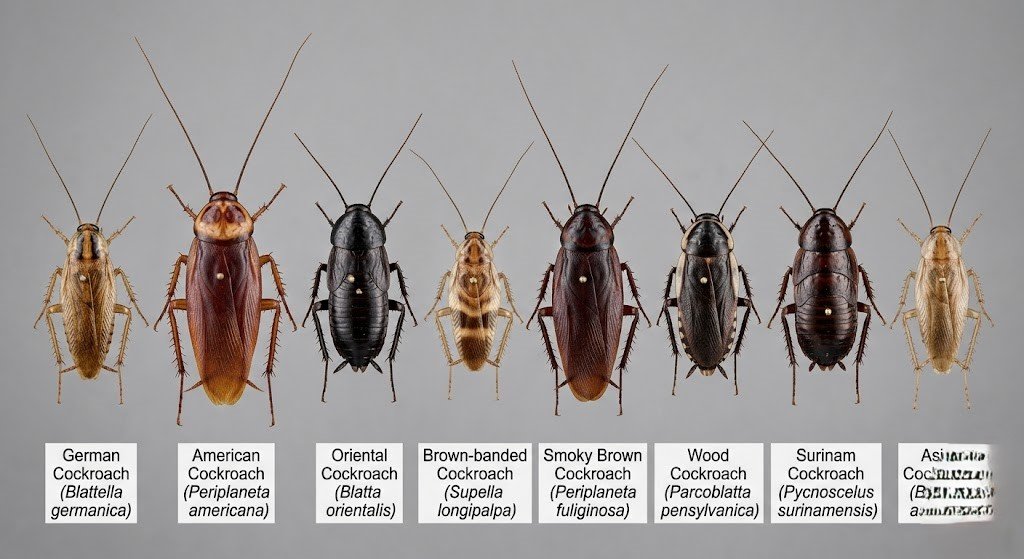
Discovering a cockroach scurrying across your kitchen counter is every homeowner’s nightmare. However, treating an infestation effectively starts with knowing exactly what you are dealing with. Different common household cockroach types require distinct control strategies, as their habits, nesting preferences, and resistance levels vary significantly.
Whether you are trying to identify a small brown bug in your cabinet or a large winged insect in the basement, this species catalog breaks down the physical traits, behaviors, and control methods for the most frequent roach invaders.
Key Takeaways
- Identification Matters: Successfully eliminating roaches depends on accurately identifying the specific species invading your space.
- German Cockroaches Are Most Common: Known for rapid breeding and indoor nesting, German roaches are the most frequent indoor pest.
- Environmental Preferences Vary: American and Oriental roaches prefer high-moisture environments like basements and drains, while Brown-banded roaches favor dry, high locations.
- Integrated Pest Management (IPM): Combining proper sanitation, moisture control, and targeted baits yields the best long-term control.
Catalog of Common Household Cockroach Types
Understanding the physical characteristics and preferred habitats of each species makes identification straightforward.
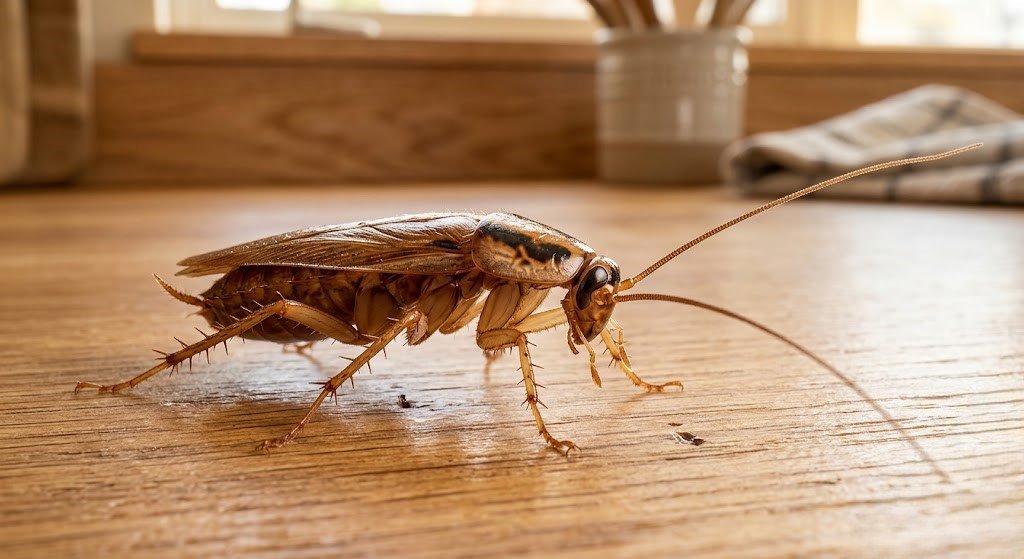
1. German Cockroach (Blattella germanica)
The German cockroach is by far the most prevalent indoor pest species found in residential homes, apartments, and commercial kitchens worldwide.
+-------------------+---------------------------------------------------------+
| Feature           | Description                                             |
+-------------------+---------------------------------------------------------+
| Size              | 1/2 to 5/8 inch (13–16 mm)                              |
| Color             | Light brown to tan with two dark parallel stripes       |
| Key Habitat       | Warm, humid areas (kitchens, bathrooms, near appliances)|
| Flight Ability    | Has wings, but rarely flies; prefers running fast       |
+-------------------+---------------------------------------------------------+
Behavior and Risks
German cockroaches reproduce at an alarming rate—a single female and her offspring can produce tens of thousands of roaches in a single year. They hide in tight crevices near heat and moisture sources, such as behind refrigerators, inside cabinets, and under sinks. Because of their fast lifecycle, they quickly build resistance to standard insecticides.
2. American Cockroach (Periplaneta americana)
Often referred to as “palmetto bugs” or “waterbugs,” American cockroaches are the largest of the common household cockroach types that infest homes.
- Size: 1.5 to 2 inches (38–50 mm)
- Color: Reddish-brown with a yellowish band around the edge of their pronotum (shield behind the head)
- Habitat: Dark, damp areas like sewers, basements, boiler rooms, and drain pipes
- Flight Ability: Fully winged; adult males and females can fly short distances in warm weather
Behavior and Risks
While American cockroaches live primarily outdoors or in municipal sewer systems, they frequently enter homes seeking water or during extreme weather. You will often find them around plumbing fixtures, sump pumps, or damp basements. For comprehensive prevention techniques, check out our guide on [Internal Link: Insert relevant internal URL here with anchor text: how to seal entry points around home plumbing].
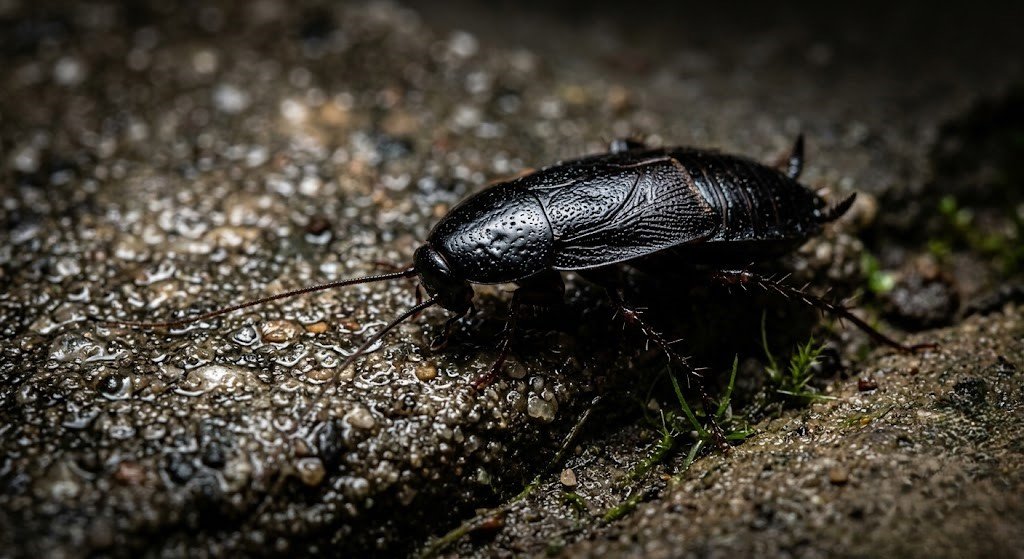
3. Oriental Cockroach (Blatta orientalis)
Frequently called “water bugs” due to their strong preference for dark, damp environments, Oriental cockroaches are easily distinguished by their dark color and shiny body.
+-------------------+---------------------------------------------------------+
| Feature           | Description                                             |
+-------------------+---------------------------------------------------------+
| Size              | About 1 inch (25 mm)                                    |
| Color             | Deep dark brown to glossy black                         |
| Key Habitat       | Drains, basements, crawl spaces, leaf litter outdoors   |
| Flight Ability    | Flightless; wings are short in males and vestigial      |
+-------------------+---------------------------------------------------------+
Behavior and Risks
Oriental cockroaches thrive in cool, damp places and move slower than other roach species. They produce a strong, musty odor and often feed on decaying organic matter, garbage, and plant material. Because they travel through sewers and drains, they carry high levels of food-borne pathogens.
4. Brown-Banded Cockroach (Supella longipalpa)
Smaller and less common than the German cockroach, the Brown-banded cockroach is unique because it prefers warm, dry locations over damp ones.
- Size: 1/2 inch (13 mm)
- Color: Light brown with two distinct lighter bands across the wings and abdomen
- Habitat: High, dry areas like upper kitchen cabinets, behind picture frames, and near electronic appliances
- Flight Ability: Males fly readily when disturbed; females cannot fly
Behavior and Risks
Unlike moisture-seeking species, Brown-banded roaches scatter throughout the house rather than staying near water sources. They are commonly found in bedrooms, living rooms, and inside electrical equipment where warmth builds up.
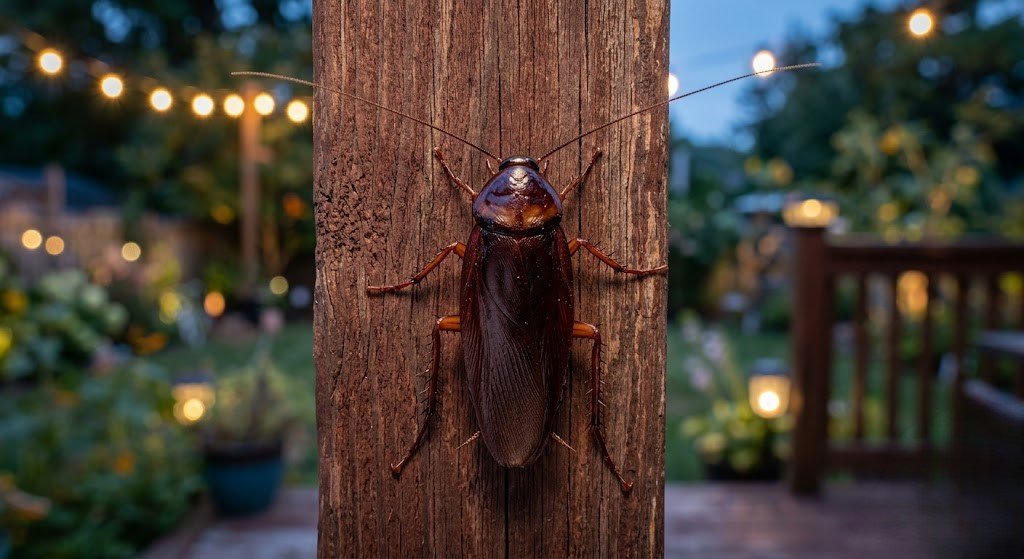
5. Smokybrown Cockroach (Periplaneta fuliginosa)
A major pest in warm, humid regions, the Smokybrown cockroach requires high humidity levels to survive and is primarily an outdoor pest that invades structures.
+-------------------+---------------------------------------------------------+
| Feature           | Description                                             |
+-------------------+---------------------------------------------------------+
| Size              | 1.25 to 1.5 inches (31–38 mm)                           |
| Color             | Uniform dark mahogany brown to deep black               |
| Key Habitat       | Tree holes, mulch beds, attics, soffits, and roofs      |
| Flight Ability    | Strong flyers attracted to outdoor night lights         |
+-------------------+---------------------------------------------------------+
How to Determine Which Species Is in Your Home
Correct identification is the foundation of any pest management program. The [External Link: Insert high-authority external URL here with anchor text: Entomological Society of America] provides extensive resources on insect taxonomy and identification guides.
When attempting identification, evaluate three main factors:
- Location: Are you seeing them in dry, elevated areas (Brown-banded), damp basements (American/Oriental), or around kitchen sinks and food prep areas (German)?
- Size and Color: Measure approximate length and look for distinct markings like stripes or bands.
- Behavior: Note whether they fly toward lights at night or quickly dash for dark cracks when a room light turns on.
Effective Management Strategies for Household Roaches
Once you have identified the common household cockroach types present in your living space, implement a targeted approach:
- Eliminate Moisture: Fix leaking pipes, dry out sinks overnight, and run dehumidifiers in basements.
- Sanitize Daily: Wipe down counters, sweep up crumbs, and store food in airtight glass or plastic containers.
- Exclude Entry Points: Seal gaps around pipe penetrations, door sweeps, and foundation cracks.
- Use Target Baits: Apply gel baits in areas specific to the identified species’ habitat.
Conclusion
Identifying the common household cockroach types in your home is the crucial first step toward eradication. Whether dealing with fast-breeding German roaches in the kitchen or moisture-loving American roaches in the basement, understanding their unique behaviors enables you to select the right baits, seal the correct entry paths, and restore peace to your home.
Frequently Asked Questions (FAQs)
What is the most dangerous common household cockroach type?
German cockroaches are considered the most troublesome due to their rapid reproduction rate, close proximity to human food prep areas, and potential to trigger asthma and transport bacteria like Salmonella.
How can I tell a German cockroach from a Brown-banded cockroach?
German cockroaches have two dark, parallel vertical stripes on their pronotum (behind the head) and prefer moist environments. Brown-banded cockroaches feature light-colored horizontal bands across their wings and body and prefer dry, elevated locations.
Do all common household cockroach types fly?
No. While American and Smokybrown cockroaches are strong flyers, German cockroaches rarely use their wings, and Oriental cockroaches are completely flightless.