

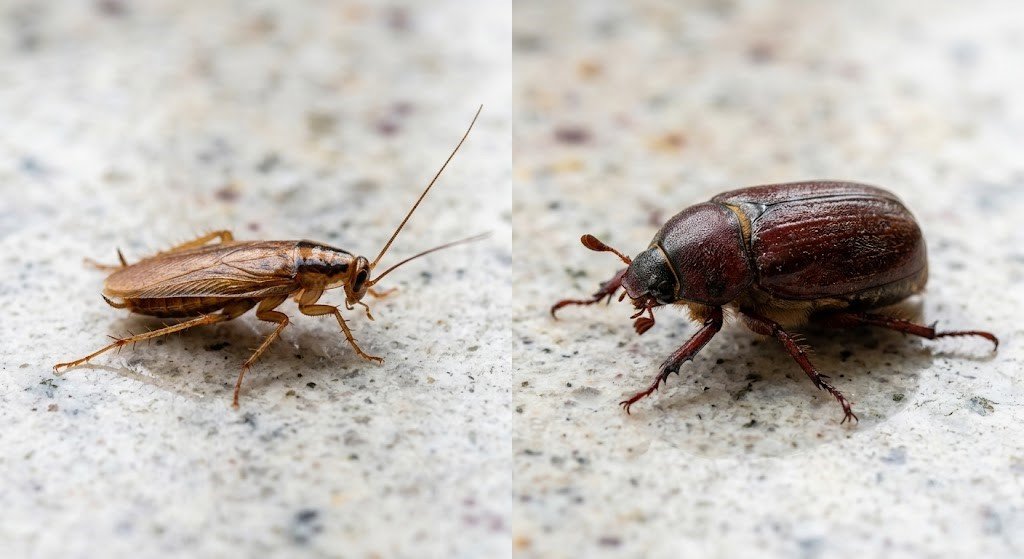
Finding an unexpected bug in your home triggers immediate concern. Before you buy expensive chemical baits or panic about an infestation, you need to verify what you are dealing with. Millions of homeowners mistake harmless beetles, outdoor water bugs, or cricket species for cockroaches every year.
Misidentifying an insect leads to wasted money on ineffective treatments—because a product designed for roach control won’t work on wood-boring beetles or garden pests. This guide breaks down the most common bugs that look like roaches, complete with physical comparison traits, behavior differences, and identification steps.
Key Takeaways: How to Identify Roach Lookalikes
- Check the Wings: Most beetles have hard, shell-like wing covers (elytra) that meet in a straight line down the back. Cockroach wings are leathery, overlapping, and flexible.
- Examine the Antennae: Cockroaches possess long, thread-like antennae that often exceed their body length. Beetle antennae are much shorter, clubbed, or elbowed.
- Inspect the Head Position: A cockroach’s head points downward and is largely hidden under a shield-like pronotum. Most lookalike bugs have clearly visible heads projecting forward.
- Behavior Matters: Roaches are nocturnal, light-phobic, and fast runners. If the bug flies directly toward indoor lights or moves slowly during daytime, it is likely a beetle or moth.
7 Common Bugs That Look Like Roaches
                           [ QUICK IDENTIFICATION CHART ]
                                         │
        ┌────────────────────────────────┴────────────────────────────────┐
        │                                                                 │
  [ HARD, SHELL WINGS ]                                         [ LEATHERY, OVERLAPPING WINGS ]
        │                                                                 │
        ▼                                                                 ▼
   BEETLE FAMILY                                                   COCKROACH FAMILY
   • June Bugs                                                     • German Cockroaches
   • Ground Beetles                                                • American Cockroaches
   • Click Beetles                                                 • Oriental Cockroaches
1. Ground Beetles (Carabidae)
Ground beetles are among the most frequent insects mistaken for cockroaches due to their dark brown or black coloration, oval bodies, and fast running speed.
- How They Differ: Ground beetles have hard, rigid wing covers (elytra) that meet in a distinct straight line along their back. Unlike cockroaches, their antennae are shorter, and their mouthparts point forward rather than downward.
- Behavior: Ground beetles live outdoors in mulch and soil. They enter homes accidentally through door gaps during hot or dry weather and do not breed indoors or infest food supplies.
2. June Bugs / May Beetles (Phyllophaga)
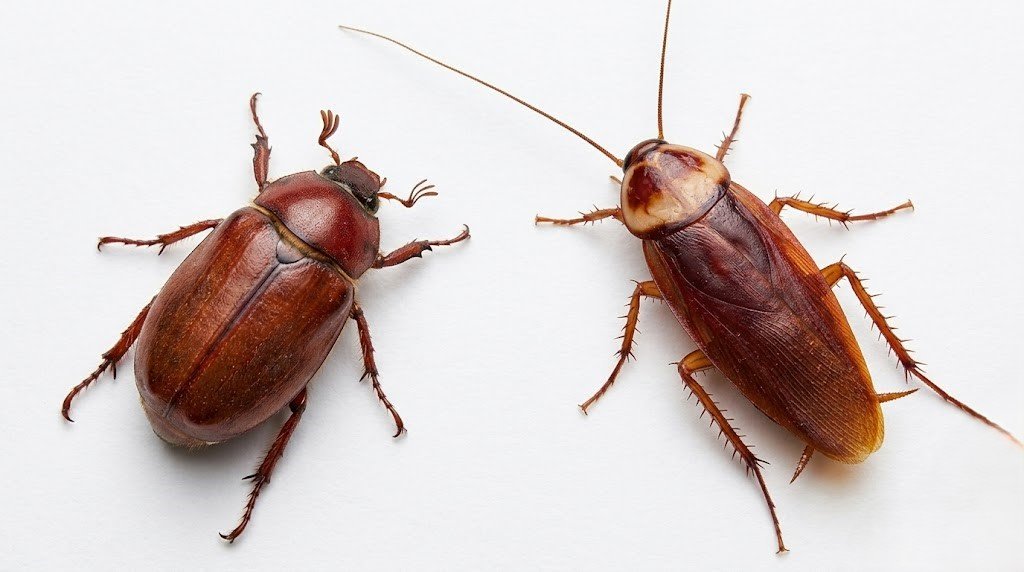
June bugs are heavy-bodied, reddish-brown beetles that emerge in late spring and summer, frequently flying into windows and outdoor lights.
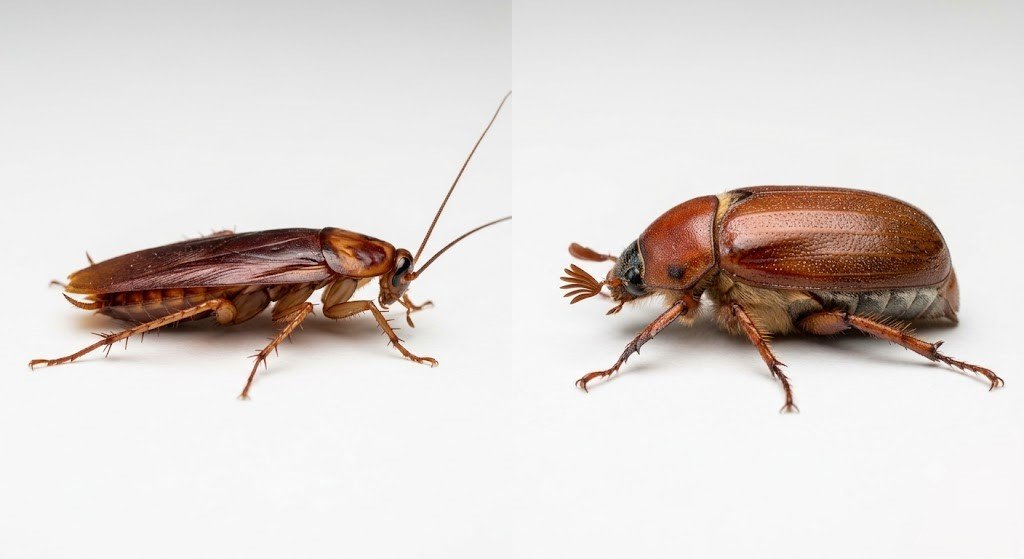
- How They Differ: June bugs have thick, convex, dome-shaped bodies compared to the flat profile of cockroaches. Their short antennae end in fan-like clubs.
- Behavior: June bugs are clumsy fliers attracted to porch lights. They often crash into screens and fall upside down. They cannot survive long indoors and pose no structural or health threat.
3. Palmetto Bugs & American Cockroaches
People often ask if palmetto bugs are a distinct species. “Palmetto bug” is simply a regional southeastern name for the American cockroach (Periplaneta americana).
- How They Differ: They are physically identical because they are the same insect. However, outdoor wood roaches and Smoky Brown cockroaches are also informally grouped under this term.
- Key Identification: American cockroaches grow up to 2 inches long, display a yellow figure-eight pattern on the shield behind their head, and possess full wings capable of short gliding flights.
4. Water Bugs (Giant Water Bugs / Belostomatidae)
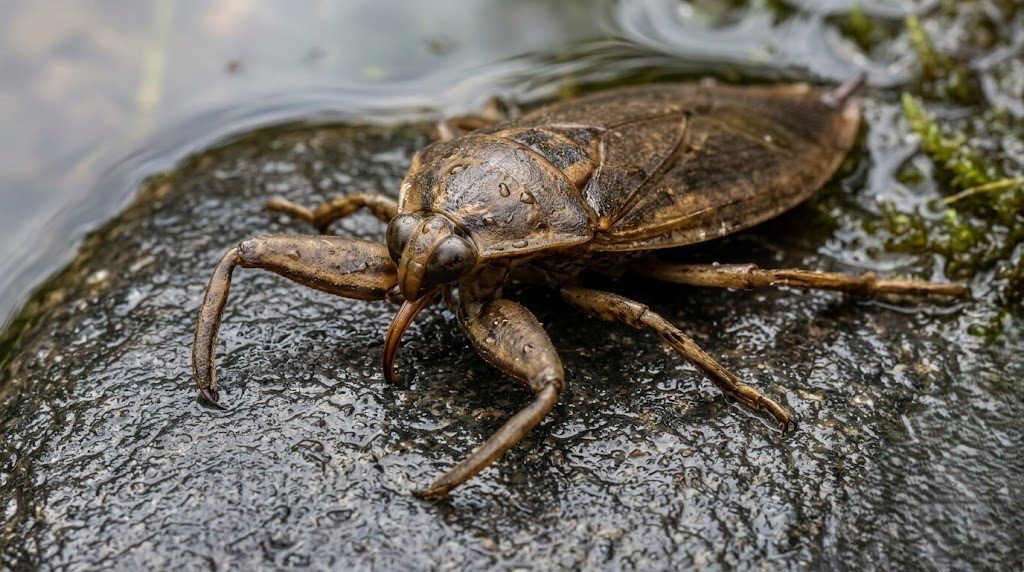
True water bugs are aquatic insects that live in ponds, streams, and swimming pools. People frequently call Oriental cockroaches “water bugs,” but true water bugs belong to an entirely different insect order (Hemiptera).
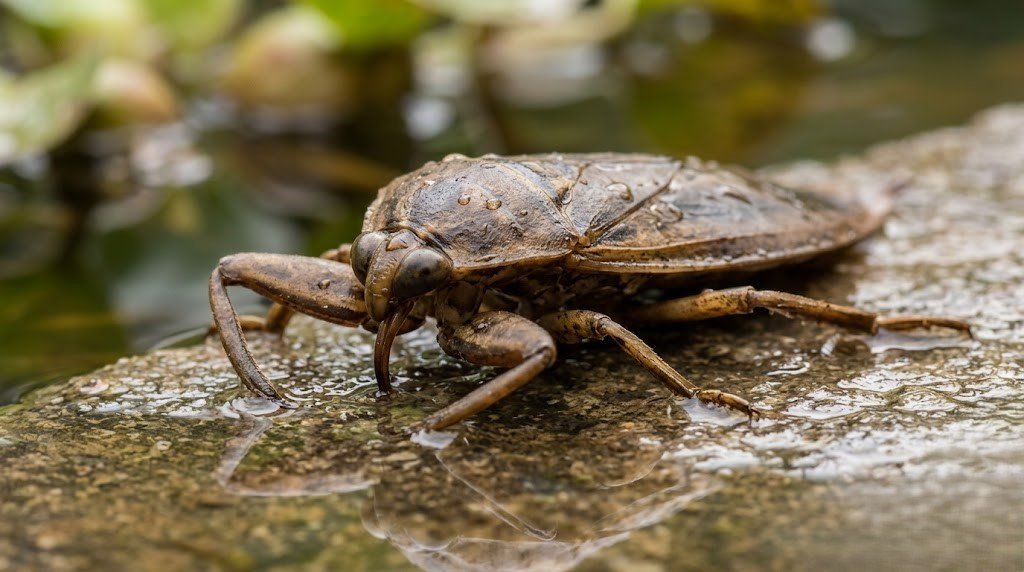
- How They Differ: True water bugs have large, claw-like front legs designed for capturing aquatic prey. They possess a prominent piercing beak (rostrum) capable of delivering a painful bite if handled.
- Behavior: True water bugs live in water and only fly toward bright outdoor lights at night. They never infest indoor kitchens or dry cabinets.
5. Click Beetles (Elateridae)
Click beetles share the elongated, dark oval body shape of young adult cockroaches, leading to frequent misidentification.
- How They Differ: Click beetles possess a unique flexible joint between their thorax and abdomen. When flipped on their back, they snap this joint to make an audible “click” sound, launching themselves into the air to right themselves. Cockroaches cannot do this.
6. Longhorned Beetles (Cerambycidae)
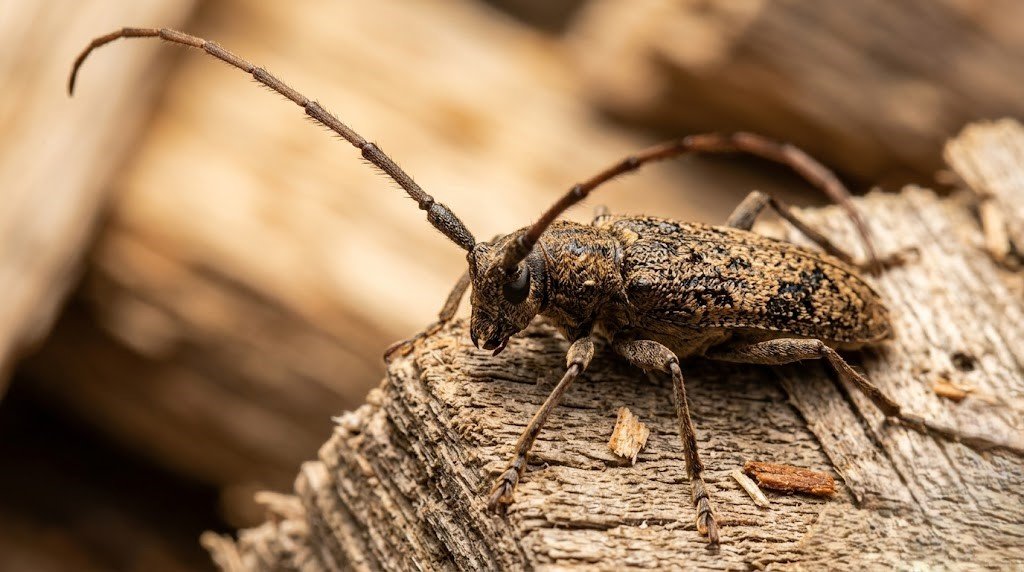
Longhorned beetles confuse homeowners because they possess extremely long antennae that mimic or exceed those of a cockroach.
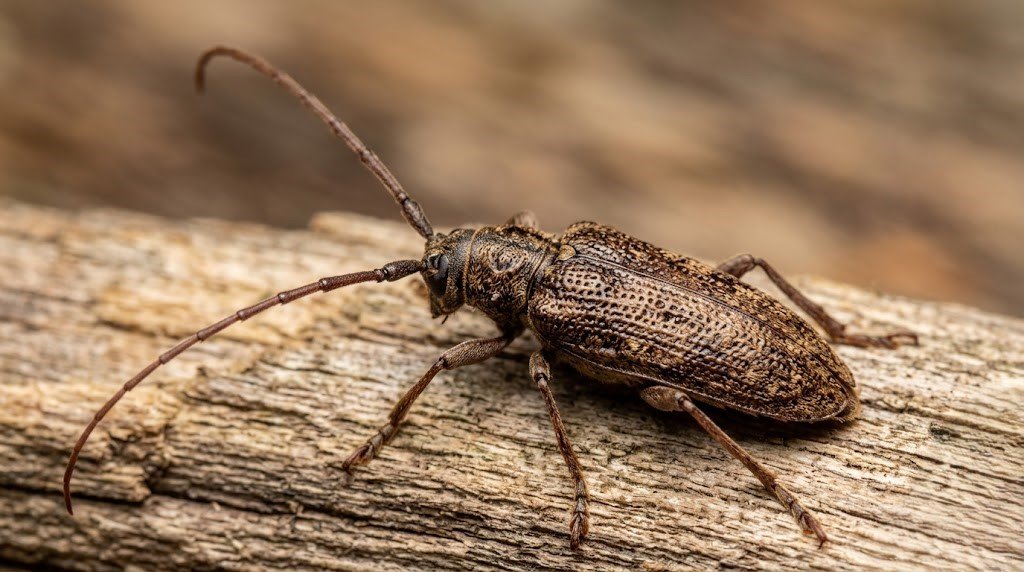
- How They Differ: Longhorned beetles have narrow, cylindrical bodies rather than flattened oval shapes. Their antennae are thicker, segmented, and curve backward along the body. They enter homes through firewood or timber.
7. Bed Bug Nymphs & Baby Roaches
German cockroach nymphs (babies) are occasionally confused with adult bed bugs due to their small size, dark reddish-brown color, and oval shape.
- How They Differ: German cockroach nymphs have a light-colored tan stripe running down the center of their back. Bed bugs are flatter, broader, lack wings entirely, and possess horizontal ridges across their abdomen.
Structural Differences: Cockroaches vs. Lookalikes
Use this comparison matrix to evaluate any bug you capture:
| Feature | Cockroach | Beetle / Lookalike |
|---|---|---|
| Body Shape | Flat, broad oval | Rounded, dome-shaped, or cylindrical |
| Wings | Leathery, flexible, overlapping | Hard, rigid shell (elytra) meeting in a straight seam |
| Antennae | Thin, thread-like, very long | Short, clubbed, or thick |
| Head Visibility | Hidden under a neck shield (pronotum) | Clearly visible projecting forward |
| Speed & Movement | Rapid, erratic running; light-phobic | Slower walking; often attracted to lights |
| Abdominal Appendages | Two small tail-like spikes (cerci) | No cerci present |
What to Do If You Find a Bug That Looks Like a Roach
- Capture the Specimen: Place a clear glass or sticky trap over the insect. Avoid crushing it so key physical markers remain intact.
- Inspect Under Bright Light: Check the wing seam and antennae length using a magnifying glass or smartphone camera zoom.
- Check the Environment: Note where you found it. Finding a single insect near a door or window after rain usually points to an outdoor beetle. Finding multiple flat insects behind a refrigerator signals a cockroach issue.
- Choose Targeted Treatment: If it is a beetle, seal door sweeps and window screens. If confirmed as a cockroach, apply targeted gel baits and growth regulators immediately.
Frequently Asked Questions
What bug is most commonly mistaken for a cockroach?
Ground beetles and June bugs are the most frequently misidentified insects. Their dark brown oval bodies and similar size make them look almost identical to cockroaches at a quick glance, especially under dim lighting.
Do beetles move as fast as cockroaches?
No. Cockroaches are among the fastest crawling insects, capable of moving over three miles per hour relative to their size. Most beetles move much slower and exhibit deliberate, plodding movement patterns.
How can I tell if a bug is a baby roach or a beetle?
Look at the back of the insect. German cockroach nymphs feature a distinctive light-tan band or stripe down their center, and they lack full wings. Beetles possess hardened wing covers (elytra) even at small sizes once mature.
Why do bugs that look like roaches come inside my house?
Outdoor beetles enter homes seeking moisture during droughts, shelter during heavy rain, or because they are attracted to indoor/outdoor lighting. Unlike cockroaches, accidental invaders do not seek out human food waste or establish indoor nests.
Final Thoughts
Accurate identification is the foundation of effective pest management. By examining wing structure, antennae length, and body shape, you can instantly distinguish harmful household roaches from harmless outdoor invaders.
If your inspection confirms a cockroach issue, skip aerosol foggers and move directly to targeted gel baits and sanitation protocols. If you’ve captured an accidental outdoor visitor like a beetle, simply relocate it outside and seal entry gaps around your doors and windows.AI Image Prompt (Gemini): A high-resolution macro side-by-side comparison photo of a German cockroach and a brown June beetle resting on a light-colored granite countertop. Natural lighting, crisp detail showing body textures, antennae differences, and leg structures, shallow depth of field, professional pest identification style.
Finding an unexpected bug in your home triggers immediate concern. Before you buy expensive chemical baits or panic about an infestation, you need to verify what you are dealing with. Millions of homeowners mistake harmless beetles, outdoor water bugs, or cricket species for cockroaches every year.
Misidentifying an insect leads to wasted money on ineffective treatments—because a product designed for roach control won’t work on wood-boring beetles or garden pests. This guide breaks down the most common bugs that look like roaches, complete with physical comparison traits, behavior differences, and identification steps.
Key Takeaways: How to Identify Roach Lookalikes
- Check the Wings: Most beetles have hard, shell-like wing covers (elytra) that meet in a straight line down the back. Cockroach wings are leathery, overlapping, and flexible.
- Examine the Antennae: Cockroaches possess long, thread-like antennae that often exceed their body length. Beetle antennae are much shorter, clubbed, or elbowed.
- Inspect the Head Position: A cockroach’s head points downward and is largely hidden under a shield-like pronotum. Most lookalike bugs have clearly visible heads projecting forward.
- Behavior Matters: Roaches are nocturnal, light-phobic, and fast runners. If the bug flies directly toward indoor lights or moves slowly during daytime, it is likely a beetle or moth.
7 Common Bugs That Look Like Roaches
                           [ QUICK IDENTIFICATION CHART ]
                                         │
        ┌────────────────────────────────┴────────────────────────────────┐
        │                                                                 │
  [ HARD, SHELL WINGS ]                                         [ LEATHERY, OVERLAPPING WINGS ]
        │                                                                 │
        ▼                                                                 ▼
   BEETLE FAMILY                                                   COCKROACH FAMILY
   • June Bugs                                                     • German Cockroaches
   • Ground Beetles                                                • American Cockroaches
   • Click Beetles                                                 • Oriental Cockroaches
1. Ground Beetles (Carabidae)
Ground beetles are among the most frequent insects mistaken for cockroaches due to their dark brown or black coloration, oval bodies, and fast running speed.
- How They Differ: Ground beetles have hard, rigid wing covers (elytra) that meet in a distinct straight line along their back. Unlike cockroaches, their antennae are shorter, and their mouthparts point forward rather than downward.
- Behavior: Ground beetles live outdoors in mulch and soil. They enter homes accidentally through door gaps during hot or dry weather and do not breed indoors or infest food supplies.
2. June Bugs / May Beetles (Phyllophaga)
June bugs are heavy-bodied, reddish-brown beetles that emerge in late spring and summer, frequently flying into windows and outdoor lights.
- How They Differ: June bugs have thick, convex, dome-shaped bodies compared to the flat profile of cockroaches. Their short antennae end in fan-like clubs.
- Behavior: June bugs are clumsy fliers attracted to porch lights. They often crash into screens and fall upside down. They cannot survive long indoors and pose no structural or health threat.
3. Palmetto Bugs & American Cockroaches
People often ask if palmetto bugs are a distinct species. “Palmetto bug” is simply a regional southeastern name for the American cockroach (Periplaneta americana).
- How They Differ: They are physically identical because they are the same insect. However, outdoor wood roaches and Smoky Brown cockroaches are also informally grouped under this term.
- Key Identification: American cockroaches grow up to 2 inches long, display a yellow figure-eight pattern on the shield behind their head, and possess full wings capable of short gliding flights.
4. Water Bugs (Giant Water Bugs / Belostomatidae)
True water bugs are aquatic insects that live in ponds, streams, and swimming pools. People frequently call Oriental cockroaches “water bugs,” but true water bugs belong to an entirely different insect order (Hemiptera).
- How They Differ: True water bugs have large, claw-like front legs designed for capturing aquatic prey. They possess a prominent piercing beak (rostrum) capable of delivering a painful bite if handled.
- Behavior: True water bugs live in water and only fly toward bright outdoor lights at night. They never infest indoor kitchens or dry cabinets.
5. Click Beetles (Elateridae)
Click beetles share the elongated, dark oval body shape of young adult cockroaches, leading to frequent misidentification.
- How They Differ: Click beetles possess a unique flexible joint between their thorax and abdomen. When flipped on their back, they snap this joint to make an audible “click” sound, launching themselves into the air to right themselves. Cockroaches cannot do this.
6. Longhorned Beetles (Cerambycidae)
Longhorned beetles confuse homeowners because they possess extremely long antennae that mimic or exceed those of a cockroach.
- How They Differ: Longhorned beetles have narrow, cylindrical bodies rather than flattened oval shapes. Their antennae are thicker, segmented, and curve backward along the body. They enter homes through firewood or timber.
7. Bed Bug Nymphs & Baby Roaches
German cockroach nymphs (babies) are occasionally confused with adult bed bugs due to their small size, dark reddish-brown color, and oval shape.
- How They Differ: German cockroach nymphs have a light-colored tan stripe running down the center of their back. Bed bugs are flatter, broader, lack wings entirely, and possess horizontal ridges across their abdomen.
Structural Differences: Cockroaches vs. Lookalikes
Use this comparison matrix to evaluate any bug you capture:
| Feature | Cockroach | Beetle / Lookalike |
|---|---|---|
| Body Shape | Flat, broad oval | Rounded, dome-shaped, or cylindrical |
| Wings | Leathery, flexible, overlapping | Hard, rigid shell (elytra) meeting in a straight seam |
| Antennae | Thin, thread-like, very long | Short, clubbed, or thick |
| Head Visibility | Hidden under a neck shield (pronotum) | Clearly visible projecting forward |
| Speed & Movement | Rapid, erratic running; light-phobic | Slower walking; often attracted to lights |
| Abdominal Appendages | Two small tail-like spikes (cerci) | No cerci present |
What to Do If You Find a Bug That Looks Like a Roach
- Capture the Specimen: Place a clear glass or sticky trap over the insect. Avoid crushing it so key physical markers remain intact.
- Inspect Under Bright Light: Check the wing seam and antennae length using a magnifying glass or smartphone camera zoom.
- Check the Environment: Note where you found it. Finding a single insect near a door or window after rain usually points to an outdoor beetle. Finding multiple flat insects behind a refrigerator signals a cockroach issue.
- Choose Targeted Treatment: If it is a beetle, seal door sweeps and window screens. If confirmed as a cockroach, apply targeted gel baits and growth regulators immediately.
Frequently Asked Questions
What bug is most commonly mistaken for a cockroach?
Ground beetles and June bugs are the most frequently misidentified insects. Their dark brown oval bodies and similar size make them look almost identical to cockroaches at a quick glance, especially under dim lighting.
Do beetles move as fast as cockroaches?
No. Cockroaches are among the fastest crawling insects, capable of moving over three miles per hour relative to their size. Most beetles move much slower and exhibit deliberate, plodding movement patterns.
How can I tell if a bug is a baby roach or a beetle?
Look at the back of the insect. German cockroach nymphs feature a distinctive light-tan band or stripe down their center, and they lack full wings. Beetles possess hardened wing covers (elytra) even at small sizes once mature.
Why do bugs that look like roaches come inside my house?
Outdoor beetles enter homes seeking moisture during droughts, shelter during heavy rain, or because they are attracted to indoor/outdoor lighting. Unlike cockroaches, accidental invaders do not seek out human food waste or establish indoor nests.
Final Thoughts
Accurate identification is the foundation of effective pest management. By examining wing structure, antennae length, and body shape, you can instantly distinguish harmful household roaches from harmless outdoor invaders.
If your inspection confirms a cockroach issue, skip aerosol foggers and move directly to targeted gel baits and sanitation protocols. If you’ve captured an accidental outdoor visitor like a beetle, simply relocate it outside and seal entry gaps around your doors and windows.