

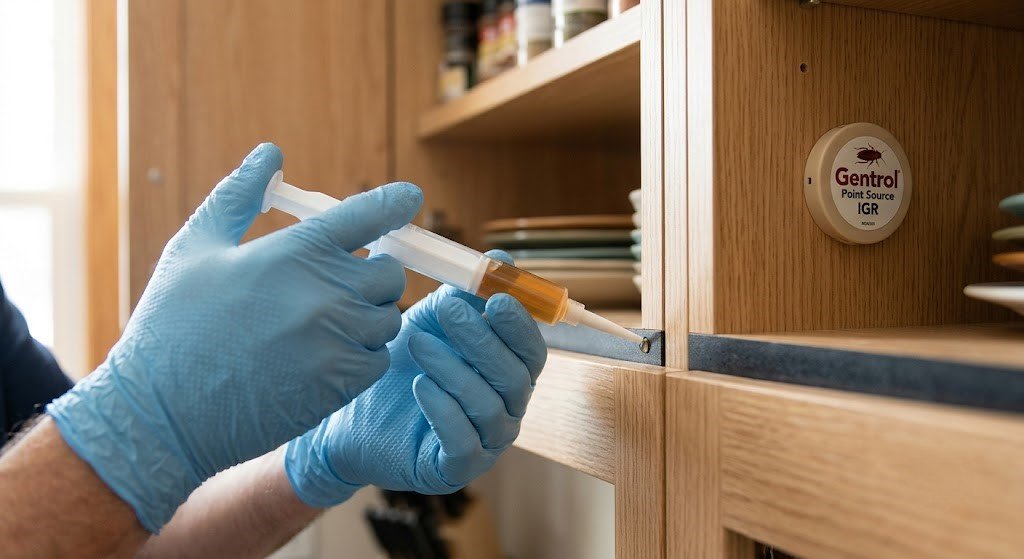
Introduction
Dealing with a stubborn insect infestation—particularly German cockroaches or invasive ant colonies—can feel like an endless battle. Standard aerosol sprays may knock down the pests you see scrambling across the counter, but they leave hundreds of hidden nymphs and breeding adults untouched deep within wall voids and cabinet joints.
To achieve total colony elimination, professional exterminators rely on a two-pronged strategy: the best gel baits & growth regulators. While high-potency gel baits act as an irresistible food source that spreads lethal active ingredients through cannibalism and coprophagy (feces consumption), Insect Growth Regulators (IGRs) disrupt the pest’s reproductive system and molting process. When used together, this combination breaks the reproductive cycle and eradicates even the most bait-averse populations.
Key Takeaways
- The Dual-Action Advantage: Gel baits deliver fast, primary and secondary mortality, while Insect Growth Regulators (IGRs) sterilize surviving adults and prevent juveniles from reaching reproductive maturity.
- Bait Aversion Prevention: Rotating gel bait formulas with different active ingredients (such as indoxacarb, fipronil, and abamectin) prevents pests from developing behavioral aversion or chemical resistance.
- Placement Over Quantity: Applying dozens of pea-sized dots in dark, warm cracks and crevices yields significantly better results than smearing large globs of gel in open areas.
- Never Mix Sprays with Baits: Avoid spraying repellent chemical aerosols directly over gel bait placements, as this contaminates the bait matrix and causes pests to avoid it.
Understanding the Chemistry: How Gel Baits & IGRs Work Together
To understand why combining the best gel baits & growth regulators is considered the gold standard in modern Integrated Pest Management (IPM), it helps to examine how each component functions at a biological level.
How Gel Baits Trigger the “Domino Effect”
Modern gel baits combine an enticing food attractant (proteins, sugars, and lipids) with a slow-acting active ingredient. Delayed toxicity is crucial: if a cockroach or ant dies immediately upon consuming the bait, other pests will quickly learn to avoid it.
Instead, foraging insects consume the gel bait and return to their hidden harborage areas. Through a process known as the “domino effect” or horizontal transfer:
- Primary Kill: Foraging insects die within 24–48 hours after eating the bait.
- Secondary Kill: Cockroaches are cannibalistic; nymphs and reclusive females consume the tainted droppings (coprophagy) and carcasses (necrophagy) of poisoned adults, spreading the toxicant throughout the nest.
- Tertiary Kill: Third-generation pests feeding on secondary casualties also ingest the active ingredient, effectively collapsing the entire colony structure.
What Are Insect Growth Regulators (IGRs) and Why Are They Essential?
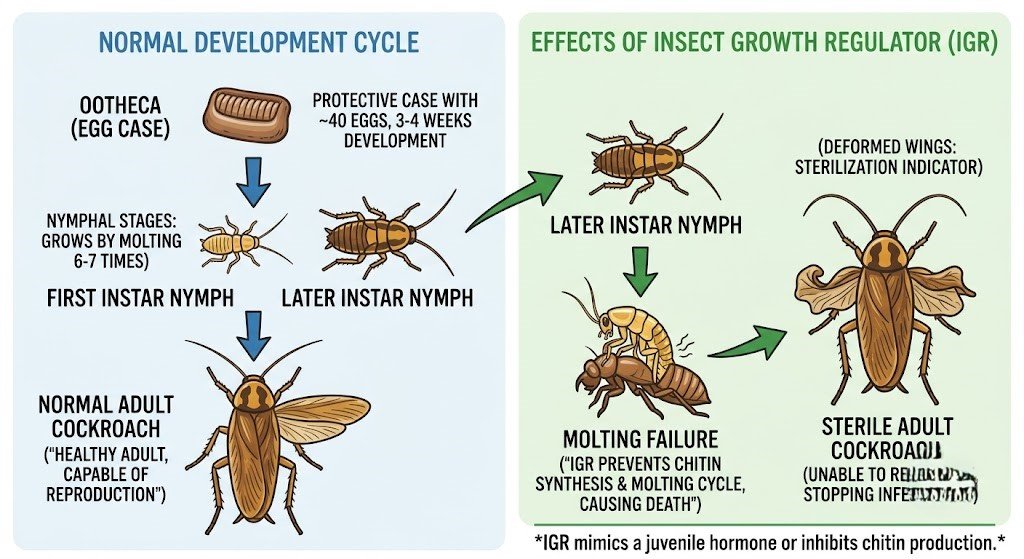
While gel baits eliminate active feeders, an egg capsule (ootheca) carried by a female cockroach can yield up to 40 new nymphs, many of which may hatch after the bait has dried out. This is where Insect Growth Regulators (IGRs) become vital.
IGRs are synthetic biochemical compounds that mimic natural juvenile hormones in insects. They do not kill adult pests on contact; instead, they disrupt critical developmental stages:
- Molting Inhibition: Juvenile nymphs are prevented from shedding their exoskeletons properly during growth stages, resulting in fatal physical deformities.
- Adult Sterilization: Exposure to IGRs causes adult females to lay sterile eggs and causes males to develop twisted, non-functional wings that prevent mating.
Pro Tip: Look for active ingredients like Pyriproxyfen (Nylar) or Hydroprene (Gentrol) when selecting an IGR to pair with your chosen gel bait.
Top-Rated Combinations: Best Gel Baits & Growth Regulators
Selecting the right products requires matching high-performance bait matrices with broad-spectrum IGRs. Below are the industry-leading product combinations tested and approved by pest control professionals.
| Combination Product / System | Active Ingredients | Key Features & Strengths | Best Used For |
| Syngenta Advion + Gentrol Point Source | Indoxacarb + Hydroprene | Bio-activation mechanism; trans-vaping IGR covers $75\text{ sq ft}$ without spraying. | Heavy German cockroach infestations in kitchens & pantries. |
| Bayer Maxforce FC Magnum + NyGuard IGR | Fipronil + Pyriproxyfen | Fast knockdown matrix; highly stable liquid IGR concentrate. | Rapid population reduction and long-term residual control. |
| MGK Vendetta Plus | Abamectin B1 + Pyriproxyfen | All-in-one dual-action gel tube containing both bait and IGR. | Enclosed spaces, apartments, and convenient single-step application. |
1. Syngenta Advion Cockroach Gel Bait + Gentrol Point Source
- Advion Gel Bait (Indoxacarb): Uses a metabolic activation process where the chemical only transforms into its active toxic form inside the insect’s gut enzymes. This makes it exceptionally safe around non-target organisms while remaining deadly to target pests.
- Gentrol Point Source (Hydroprene): A unique, discrete station that releases a localized vapor. The active ingredient travels airborne into dark cracks, cabinet corners, and motor housings without requiring liquid spraying.
For comprehensive guidelines on structural pest prevention and safety compliance, review the [External Link: Insert high-authority external URL here with anchor text, e.g., EPA’s official guide to Citizens Guide to Pest Control and Pesticide Safety].
2. Bayer Maxforce FC Magnum + NyGuard IGR Concentrate
- Maxforce FC Magnum (Fipronil): Known for its rapid speed-of-kill and high palatability. Maxforce contains ContactX technology, allowing roaches to absorb the active ingredient simply by walking across applied gel placements.
- NyGuard IGR (Pyriproxyfen): A versatile, photostable growth regulator that can be mixed into tank sprays or applied in harborage areas to prevent egg hatchability for up to 7 months.
3. Vendetta Plus Roach Gel Bait (Dual-Action Matrix)
If you prefer an all-in-one solution, Vendetta Plus combines Abamectin B1 with Pyriproxyfen directly inside a single syringe tube. This dual-action formulation simplifies the application process by delivering a potent bait and an effective insect growth regulator simultaneously.
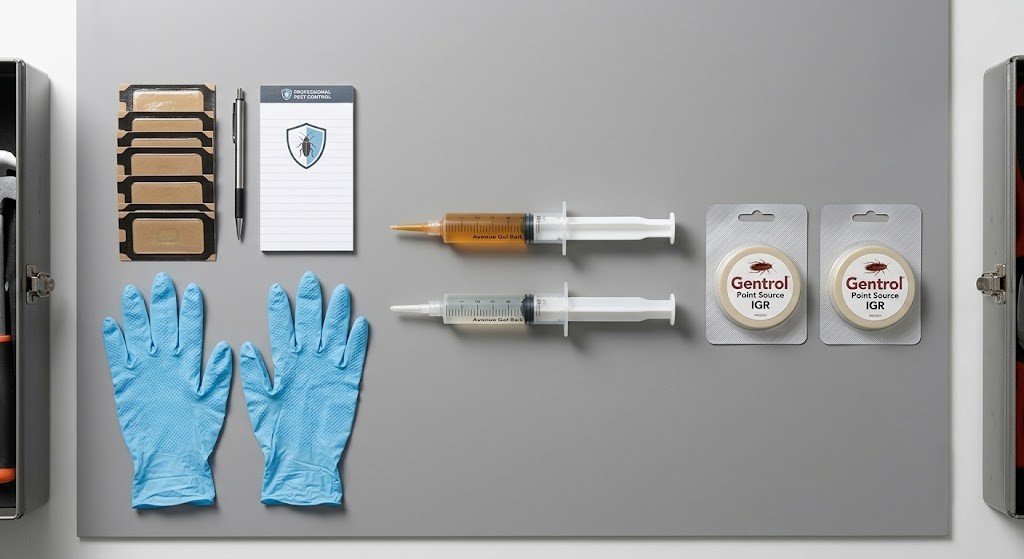
Strategic Application: How to Apply Gel Baits & Growth Regulators like a Pro
Buying the best gel baits & growth regulators is only half the battle—correct application strategy determines whether your treatment succeeds or fails.
┌─────────────────────────────────────────────────────────────┐
│              PROFESSIONAL BAITING PROTOCOL                  │
├─────────────────────────────────────────────────────────────┤
│ 1. INSPECT   ➜ Locate harborage zones (hinges, motors, gaps)│
│ 2. CLEAN     ➜ Remove competing food sources & grease       │
│ 3. APPLY GEL ➜ Place pea-sized dots every 12-18 inches      │
│ 4. DEPLOY IGR➜ Activate Gentrol discs or spot-treat voids    │
│ 5. MONITOR   ➜ Replace consumed gel & check glue traps weekly│
└─────────────────────────────────────────────────────────────┘
Master the “Pea-Sized Spot” Technique
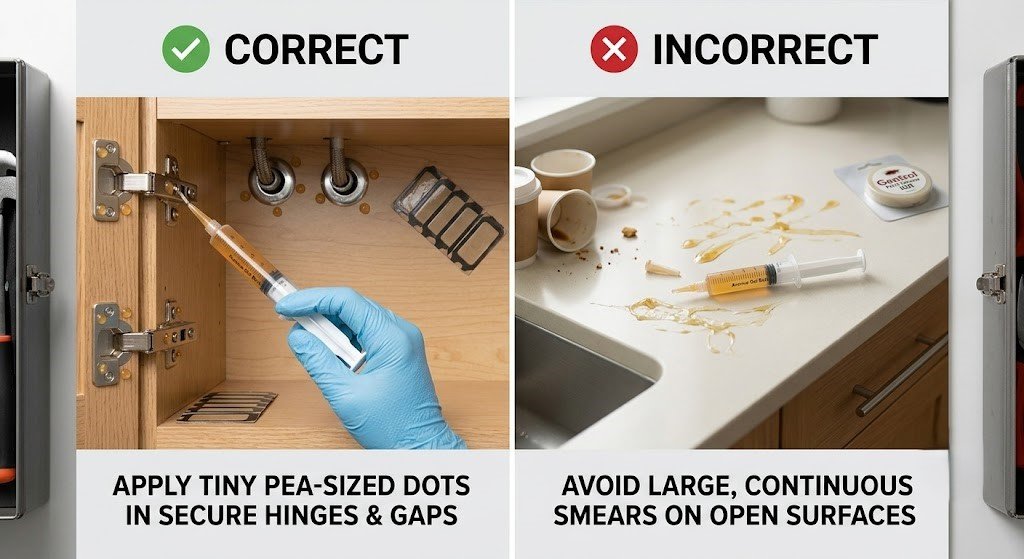
One of the most common mistakes homeowners make is applying long, thick stripes of gel bait. This causes the gel to dry out prematurely and crust over, making it unappetizing to pests.
- Size Matters: Apply small dots about the size of a green pea (approximately $0.25\text{ grams}$ or $3\text{ mm}$ to $6\text{ mm}$ in diameter).
- Frequency: Space placements every $12\text{ to }18\text{ inches}$ along known travel routes, cabinet hinges, pipe penetrations, and behind major appliances.
- Target Harborage Zones: Apply gel directly into cracks, crevices, and dark corners where pests harbor rather than on open, exposed surfaces.
To learn more about identifying specific pest species before choosing a bait matrix, explore our [Internal Link: Insert relevant internal URL here with anchor text, e.g., comprehensive guide to identifying indoor pest infestations].
Avoid Common Application Pitfalls
- Avoid Spray Contamination: Never apply liquid residual sprays (like pyrethroid sprays) over or near gel bait placements. The repellent chemical scent will contaminate the food matrix, causing insects to reject the bait completely.
- Eliminate Competing Food Sources: Clean up grease, food crumbs, and standing water prior to baiting. If alternative food sources are readily available, pests may ignore the gel bait.
- Do Not Clean Away Pheromone Trails: Avoid using harsh chemical cleaners (like bleach or ammonia) near bait placements, as this disrupts natural foraging paths.
Preventing Resistance: The Importance of Bait Rotation
Insects—particularly German cockroaches (Blattella germanica)—reproduce rapidly and can develop physiological resistance or behavioral aversion to specific gel bait matrices over consecutive generations.
If a colony detects that a particular bait matrix is harmful, or if they develop a genetic resistance to active ingredients like fipronil or indoxacarb, they will stop feeding on it.
The 3-Month Rotation Strategy
To prevent bait failure, professionals recommend alternating your gel bait formulas every 90 days:
- Quarter 1 (Class 22 Insecticide): Use an Indoxacarb-based bait (e.g., Syngenta Advion).
- Quarter 2 (Class 2B Insecticide): Switch to a Fipronil-based bait (e.g., Bayer Maxforce FC Magnum).
- Quarter 3 (Class 6 Insecticide): Rotate to an Abamectin-based bait (e.g., Rockwell InVict Gold or Vendetta).
Because Insect Growth Regulators operate on hormonal pathways rather than nervous systems, pests rarely build resistance to IGRs, making them an unwavering anchor throughout your rotation cycle.
Conclusion
Eradicating a persistent pest infestation requires more than off-the-shelf aerosol sprays. By pairing the best gel baits & growth regulators, you target every stage of the insect life cycle—delivering swift mortality to active foragers while sterilizing the hidden population to guarantee complete colony collapse.
Ensure success by applying small, pea-sized placements in dark cracks, keeping bait free from repellent spray contamination, and rotating active ingredients every few months to prevent resistance. With this professional-grade protocol, you can permanently reclaim your space from unwanted pests.
Frequently Asked Questions (FAQs)
How long does it take for gel baits & growth regulators to work?
Gel baits typically begin killing foraging pests within 24 to 48 hours. However, complete colony elimination using gel baits and growth regulators usually takes 2 to 4 weeks, as the IGR gradually prevents new generations from maturing and reproducing.
Can I use IGRs and gel baits together at the same time?
Yes! In fact, combining gel baits with IGRs is highly recommended. Insect Growth Regulators do not act as repellents, meaning they will not discourage insects from eating the gel bait.
Where is the best place to put cockroach gel bait?
Apply gel bait in dark, warm, and humid areas near known pest harborages. Key locations include cabinet hinges, behind refrigerators and dishwashers, under sinks near pipe penetrations, and inside drawer seams.
How often should I reapply gel bait?
Inspect your bait placements weekly. Reapply fresh gel whenever previous placements have been entirely consumed or have dried out into a hard crust (usually every 14 to 30 days depending on humidity levels).