

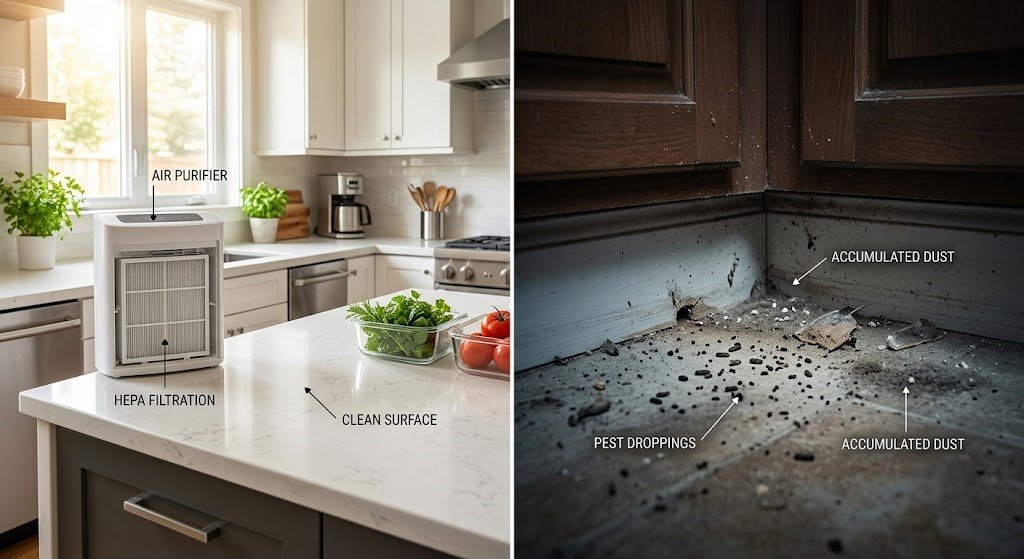
For millions of people living with chronic asthma and year-round respiratory issues, the primary trigger isn’t blooming flowers or outdoor smog. Instead, it lurks quietly inside the walls, under kitchen sinks, and in dark cabinet corners. The connection between cockroach allergens and air quality is one of the most significant, yet frequently overlooked, factors in residential indoor air pollution and chronic respiratory illness.
Cockroach fragments, saliva, and fecal droppings contain potent proteins (such as Bla g 1 and Bla g 2) that easily breakdown into microscopic airborne particles. When breathed in, these biological pollutants irritate sensitive airway linings, triggering severe allergic reactions and persistent asthma attacks—especially in children and urban residents.
Key Takeaways
- The Silent Trigger: Cockroach allergens consist of microscopic proteins found in saliva, shed exoskeletons, and fecal matter that contaminate indoor dust.
- Air Quality Impact: Unlike lightweight pollen that floats indefinitely, cockroach allergens settle into carpets, bedding, and soft furnishings, becoming resuspending in the air during daily activities like walking or vacuuming.
- Severe Health Effects: Exposure is linked to chronic allergic rhinitis, frequent asthma flare-ups, emergency room visits, and long-term airway inflammation.
- Integrated Management: Controlling allergens requires a dual approach: eliminating pest infestations using Integrated Pest Management (IPM) and purifying the air with high-efficiency filtration.
How Cockroach Allergens Degrade Indoor Air Quality
When people evaluate home air quality, they often focus on volatile organic compounds (VOCs), outdoor smog, or pet dander. However, biological contaminants from pests represent a major source of particulate pollution.
What Are Cockroach Allergens?
Cockroach allergens are specific protein molecules produced by species such as the German cockroach (Blattella germanica) and American cockroach (Periplaneta americana). These proteins are secreted in:
- Fecal Droppings: Microscopic waste particles containing digestive enzymes.
- Shed Exoskeletons: Chitin fragments left behind during molting stages.
- Saliva & Secretions: Chemical traces left on food surfaces, countertops, and nesting sites.
As these organic materials dry out, they disintegrate into ultra-fine dust. According to studies referenced by the American Lung Association and pest management researchers, over 60% of typical homes—and up to 98% of urban residences—contain measurable levels of cockroach allergens in dust samples.
The Resuspension Effect in Household Air
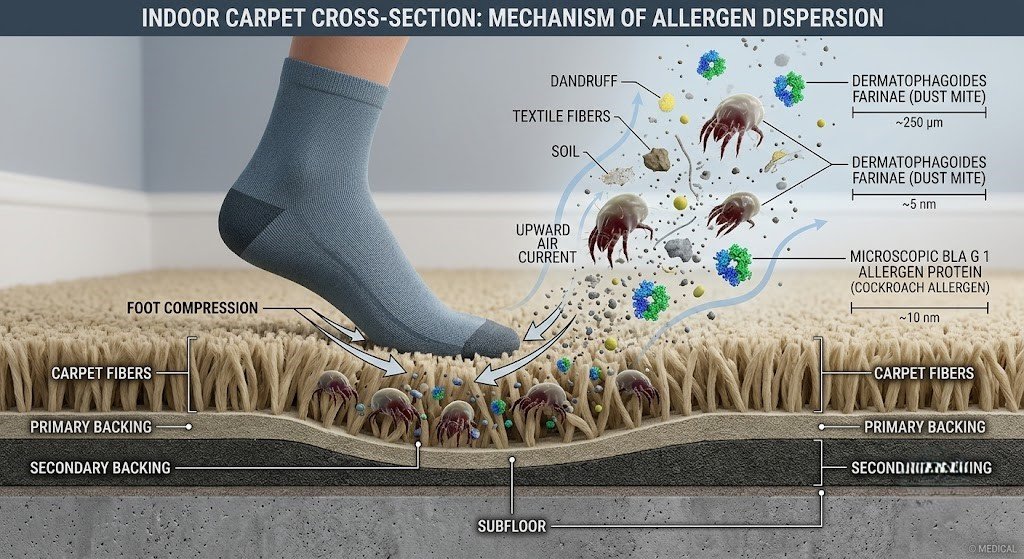
A critical aspect of cockroach allergens and air quality is how these heavy particles interact with indoor airflow.
Unlike lighter allergens that remain suspended in the air for extended periods, cockroach proteins quickly bind to heavy house dust and fall onto surfaces. They accumulate in:
- Carpets and area rugs
- Upholstered sofas and chairs
- Pillows, mattresses, and bed sheets
- HVAC ductwork and return vents
Whenever someone walks across a carpet, sits on a couch, or uses a standard vacuum cleaner without a HEPA filter, these settled particles are kicked back up into the breathing zone. This continuous cycle of resuspension means indoor air quality remains compromised even when live pests are not actively visible.
For further insights into optimizing home ventilation and pollutant control, read our comprehensive guide on [Internal Link: Insert relevant internal URL here with anchor text: improving indoor ventilation for respiratory health].
Medical Impact: Allergies, Asthma, and Respiratory Health
Exposure to pest allergens acts as both a primary cause of sensitization and a severe chronic asthma trigger.
[Exposure to Dried Pest Waste & Saliva]
                 │
                 ▼
[Biological Proteins Bind to Indoor Dust]
                 │
                 ▼
[Disturbance & Inhalation into Airways]
                 │
                 ▼
[Immune System IgE Response & Airway Swelling]
Common Symptoms of Cockroach Allergy
When an individual sensitized to pest proteins inhales contaminated dust, the immune system triggers an IgE-mediated response. Typical symptoms mimic year-round allergic rhinitis:
- Persistent sneezing and nasal congestion
- Itchy, watery, or inflamed eyes
- Postnasal drip and chronic throat irritation
- Unexplained skin rashes or hives
The Cockroach-Asthma Connection
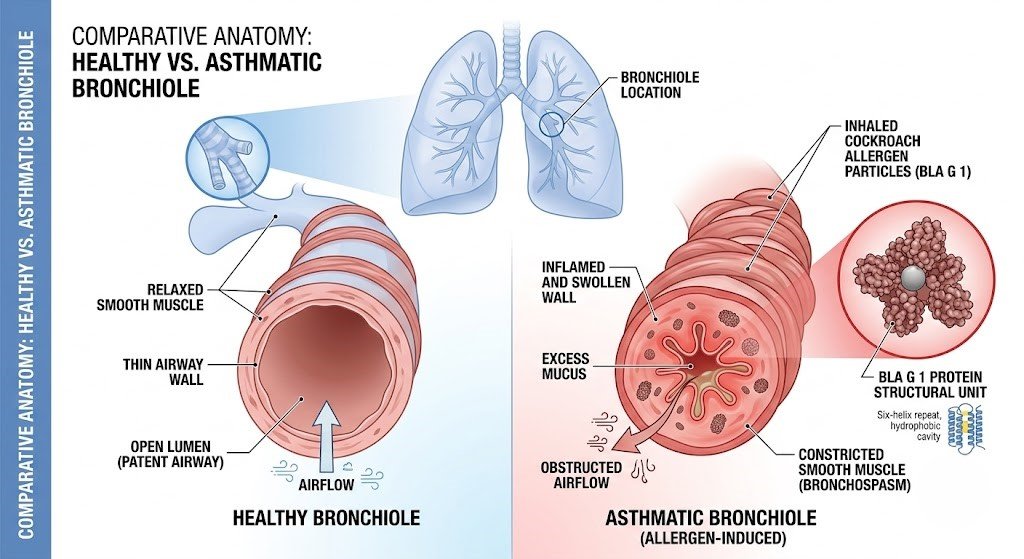
For individuals diagnosed with asthma, inhaling these protein particles can lead to severe airway hyper-reactivity. The bronchial tubes constrict, produce excess mucus, and become inflamed, resulting in:
- Persistent coughing, particularly at night
- Pronounced wheezing and chest tightness
- Shortness of breath during minor physical activity
The American Academy of Allergy, Asthma & Immunology (ACAAI) notes that children exposed to high levels of cockroach allergens suffer significantly more missed school days, higher emergency room visit rates, and increased reliance on rescue inhalers.
Actionable Strategies to Improve Air Quality and Reduce Allergens
Managing cockroach allergens and air quality requires a combined two-pronged strategy: pest eradication to cut off the source, and environmental air remediation to clean existing allergen reservoirs from the room.
1. Eliminate Moisture and Food Sources
Cockroaches require water and organic material to survive. Depriving them of these resources stops population growth naturally:
- Fix Leaks Immediately: Repair dripping faucets, leaking pipe joints under sinks, and sweating refrigerator lines.
- Airtight Food Storage: Store grains, pet food, and pantry items in sealed glass or heavy plastic containers.
- Maintain Low Indoor Humidity: Keep indoor relative humidity between 30% and 50% using dehumidifiers to make the environment inhospitable to pests and dust mites.
2. Practice Integrated Pest Management (IPM)
Avoid using broadcast chemical sprays or foggers (“bug bombs”). Spray chemicals irritate sensitive airways and stir up settled dust, worsening air quality.
- Use sealed bait stations and gel formulations in cracks and crevices.
- Seal entry points along baseboards, pipe penetrations, and wall cracks with silicone caulk.
- Consult professional exterminators trained in low-toxicity Integrated Pest Management methods.
3. Deploy High-Efficiency Air Filtration & Cleaning
Removing biological proteins from indoor air requires mechanical filtration and targeted cleaning protocols:
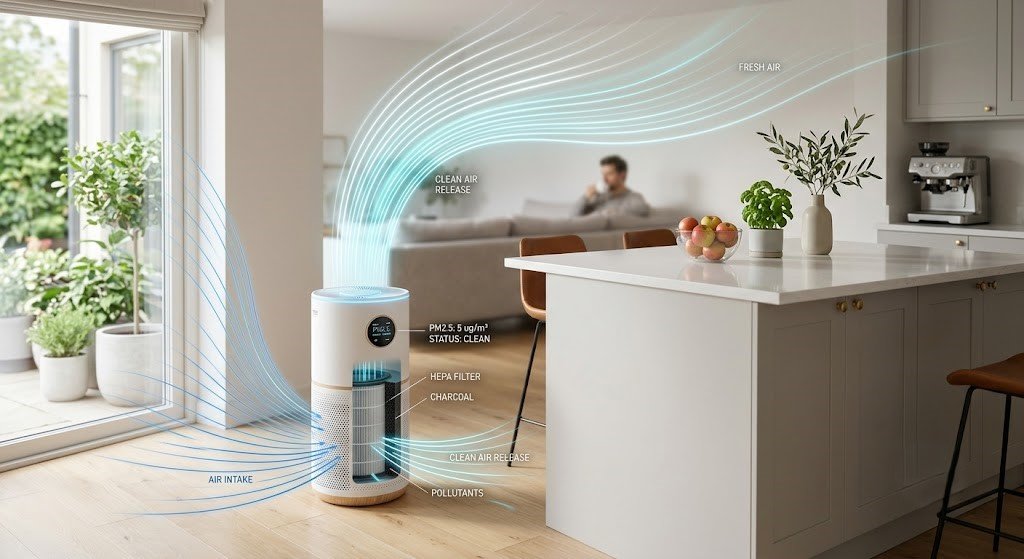
- HEPA Air Purifiers: Place standalone True HEPA air purifiers in high-occupancy areas like bedrooms and living rooms to capture fine resuspending particles down to 0.3 microns.
- HEPA Vacuuming: Vacuum hard floors, carpets, and upholstered furniture twice weekly using a vacuum cleaner equipped with a sealed HEPA filter to prevent airborne blowback.
- Wash Bedding in Hot Water: Wash sheets, pillowcases, and blankets weekly in water at or above 130°F (54.4°C) to neutralize allergen proteins.
- Encase Mattresses: Use allergen-proof zippered covers on mattresses and pillows to seal off deep-seated dust reservoirs.
For detailed clinical guidance on environmental control measures, review the official recommendations on [External Link: Insert high-authority external URL here with anchor text: American Lung Association guidelines on indoor pest allergens].
Comparing Common Indoor Biological Allergens
Understanding how cockroach contaminants compare to other household triggers helps prioritize remediation efforts:
| Biological Allergen | Primary Source | Particle Behavior in Air | Best Control Method |
|---|---|---|---|
| Cockroach Allergens | Saliva, feces, exoskeletons | Settles quickly; resuspended by activity | IPM, baiting, HEPA air filtration, humidity control |
| Dust Mite Allergens | Microscopic mite droppings | Heavy particles; collects in bedding/carpets | Encasements, hot water washing, dehumidification |
| Pet Dander | Microscopic shed skin flakes | Extremely light; remains airborne for hours | HEPA purifiers, bathing pets, carpet removal |
| Mold Spores | Fungal growth on damp surfaces | Very lightweight; travels effortlessly through HVAC | Moisture control, fixing leaks, antimicrobial cleaning |
Conclusion
Understanding the link between cockroach allergens and air quality is essential for maintaining a healthy home environment and protecting vulnerable family members from asthma attacks. Because pest proteins persist in indoor dust long after live insects are gone, resolving the issue requires more than just pest control—it demands dedicated indoor air purification, moisture management, and meticulous cleaning practices. By taking a proactive, integrated approach, you can dramatically clear your home’s air and enjoy lasting respiratory relief.
Frequently Asked Questions (FAQs)
How long do cockroach allergens remain in the air and dust?
Cockroach allergens are heavy proteins that quickly settle into dust, carpets, and fabrics rather than remaining suspended indefinitely. However, without deep cleaning and HEPA filtration, these proteins can persist in household dust and soft furnishings for months or even years after the pest infestation has been resolved.
Can a HEPA air purifier remove cockroach allergens from air?
Yes. True HEPA filters capture 99.97% of airborne particles as small as 0.3 microns, which includes resuspended cockroach allergen dust. While purifiers effectively clean airborne particles stirred up by movement, they should be combined with HEPA vacuuming and surface cleaning to address settled allergen reservoirs.
Why are cockroach allergies worse in urban areas?
Cockroach allergies are often more prevalent in densely populated urban environments due to multi-family building structures, shared wall cavities, higher ambient humidity, and aging infrastructure that provide pests easy access to food, water, and shelter.
How do doctors test for cockroach allergen sensitivity?
An allergist can diagnose a cockroach allergy through a routine skin prick test or a specific IgE blood test. During a skin test, a tiny amount of purified allergen extract is placed on the skin; a raised red bump within 15 minutes indicates a positive reaction.