

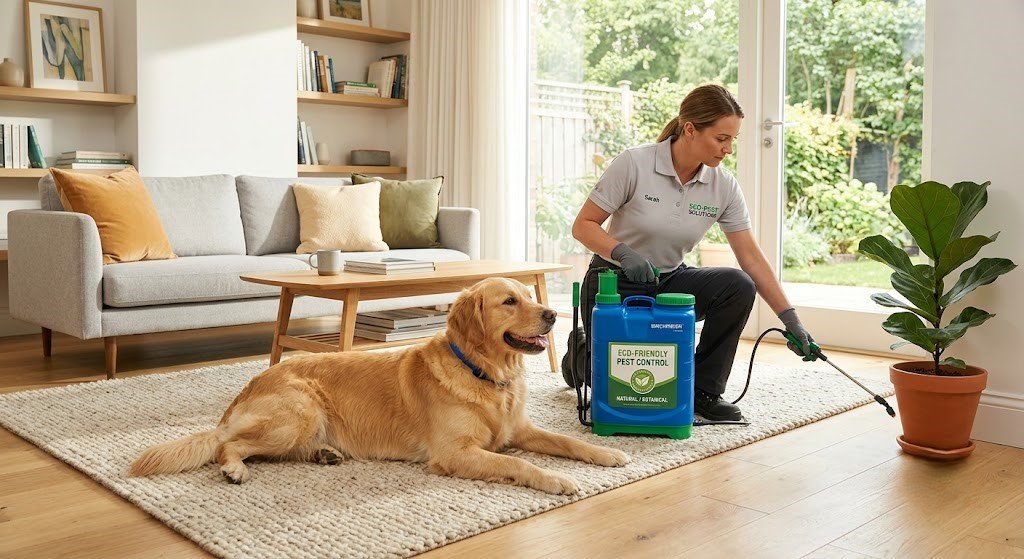
Managing a home invasion of insects or rodents requires swift action, but for pet parents, the priority is always the well-being of dogs, cats, birds, and aquatic pets. Standard chemical extermination treatments can introduce airborne toxins, hazardous residues, and poisonous baits into areas your animals frequent every day.
Implementing proper pet safe pest control precautions allows you to eliminate unwanted household pests without putting your four-legged family members in harm’s way. Because pets interact with their environment by sniffing low-lying surfaces, licking their paws after walking across floors, and exploring tight corners, their exposure risk differs significantly from humans.
Key Takeaways
- Clear the Zone First: Remove all food bowls, chew toys, bedding, and cages from the treatment area before any pest application begins.
- Respect Drying Times: Keep pets strictly away from liquid-treated surfaces until sprays have completely dried and rooms are fully ventilated.
- Isolate Aquatic & Avian Life: Turn off air pumps and cover fish tanks; move birds completely away from treated zones, especially during aerosol or fogger treatments.
- Use Tamper-Resistant Baits: Rodent and insect baits should always be locked inside secure, heavy-duty bait stations positioned far out of reach.
- Consult Professionals: Always inform pest control technicians in advance about the specific types of pets living in your home.
Understanding the Risks: Why Common Pesticides Endanger Pets
Pets have faster metabolisms, lower body weights, and grooming habits that make them far more sensitive to chemical pesticides than adults.
High-Risk Chemical Classes
- Organophosphates & Carbamates: Frequently found in heavy-duty insecticides, these compounds affect the central nervous system and can trigger severe salivation, muscle tremors, and respiratory distress.
- Anticoagulant Rodenticides: Mouse and rat poisons are often flavored with grain or peanut butter to attract pests, making them equally appealing—and fatal—to dogs and cats.
- Pyrethroids & Permethrins: While commonly used in flea treatments for dogs, permethrin is highly toxic to cats and can cause acute neurological poisoning.
To avoid accidental exposure, reviewing product safety data sheets or consulting a veterinarian before treatment is essential. Learn more about maintaining a healthy living environment in our guide.
Pre-Treatment: Preparing Your Home Safely
Preparing your home ahead of time is the most crucial phase of any pest control routine.
1. Remove Personal Belongings
Pick up all pet items, including toys, food dishes, water bowls, crates, and litter boxes. Store them inside sealed plastic bags or place them in a room that will not undergo treatment.
2. Safeguard Fish, Birds, and Small Mammals
- Fish Tanks: Turn off air filtration pumps to prevent airborne chemicals from being pulled into the water. Cover the top tightly with plastic wrap and a damp towel.
- Birds & Reptiles: Birds have extremely sensitive respiratory systems; aerosol mists or volatile organic compounds (VOCs) can be lethal to them. Relocate birds and small caged animals to a different building during treatment.

During Application: Executing Pet Safe Pest Control Precautions
Whether you choose DIY solutions or hire professional exterminators, active application demands strict isolation rules.
                 PET EXPOSURE PREVENTION PROTOCOL
 ┌────────────────┐     ┌────────────────┐     ┌────────────────┐
 │ 1. EVACUATE    │ ──> │ 2. VENTILATE   │ ──> │ 3. DRY CHECK   │
 │ Keep pets out  │     │ Open windows   │     │ Ensure 100%    │
 │ during spray.  │     │ and run fans.  │     │ dry surfaces.  │
 └────────────────┘     └────────────────┘     └────────────────┘
- Evacuate the Treatment Area: Dogs and cats should either be boarded, taken for a walk, or kept isolated in an untreated, well-ventilated room with the door shut.
- Turn Off HVAC Systems: Turn off central heating or air conditioning during fogger or spray applications to prevent pesticides from circulating through the ductwork into safe zones.
- Use Locked Bait Stations: Never leave loose rodenticide pellets or gel baits in open areas. Use weighted, tamper-resistant bait stations anchored in places pets cannot reach or nudge open.
Post-Treatment: Safe Re-Entry Protocols
Allowing pets back into a treated space too quickly is one of the most common causes of accidental toxicity.
| Product Type | Minimum Exclusion Time | Key Re-entry Requirement |
|---|---|---|
| Indoor Liquid Sprays | 2 to 4 Hours | Surfaces must be completely dry to the touch. |
| Aerosols & Foggers | 4 to 6 Hours | Full air exchange via opened windows/fans. |
| Outdoor Lawn Granules | 24 Hours | Granules must be watered in and completely dried. |
| Gel Baits (Injected) | Immediate (if hidden) | Apply strictly inside deep cracks and crevices. |
Before letting pets roam freely, inspect baseboards, floor edges, and yard spaces. If liquid residue feels damp, allow extra time for air drying. For detailed regulatory standards on pesticide chemical toxicity.

Natural & Low-Toxicity Alternatives (IPM Strategies)
If chemical treatments pose too great a concern, consider Integrated Pest Management (IPM)—a holistic approach that prioritizes physical barriers and low-toxicity solutions.
Safe DIY Options
- Diatomaceous Earth (Food Grade): This fine powder damages the exoskeletons of crawling insects like ants and fleas. Caution: Apply lightly to prevent dust inhalation.
- Pheromone & Mechanical Traps: Non-toxic sticky traps placed inside cabinets or behind appliances capture pests without chemicals.
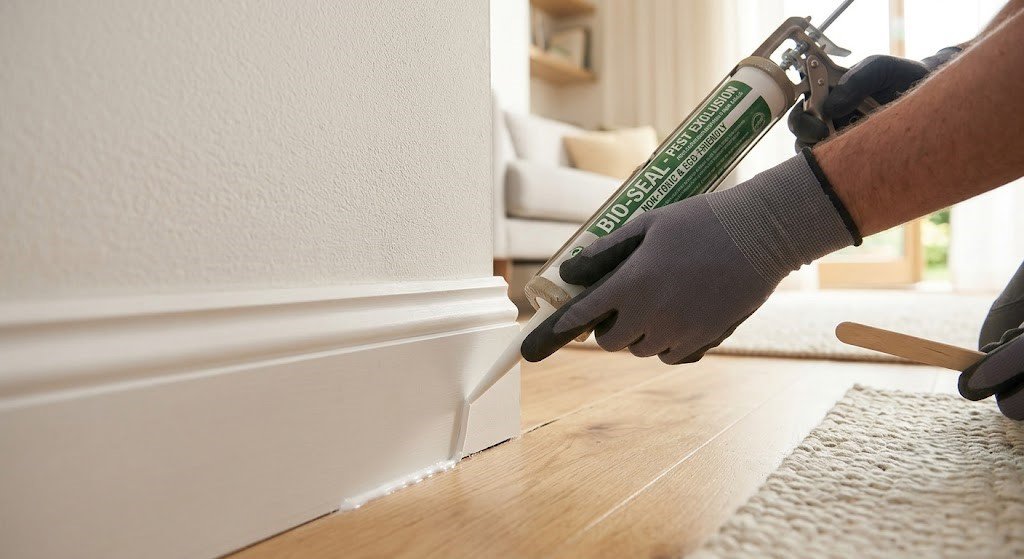
- Exclusion Methods: Seal entry cracks with silicone caulk or stainless steel mesh to block rodents and bugs from entering.
Warning on Essential Oils: While tea tree, peppermint, and eucalyptus oils are frequently marketed as natural pest repellents, many are toxic to cats and dogs when diffused or applied topically. Always verify plant and oil safety with a veterinarian first.
Emergency Action: Recognizing Pesticide Poisoning in Pets
Despite taking precautions, accidental contact or ingestion can occasionally occur. Recognizing symptoms early saves lives.
Symptoms of Pesticide Exposure
- Excessive drooling or foaming at the mouth
- Uncontrolled vomiting or diarrhea
- Lethargy, weakness, or stumbling (ataxia)
- Muscle twitching, seizures, or collapse
If you suspect your pet has ingested or touched toxic materials:
- Immediately remove them from the treated area.
- Do not induce vomiting unless explicitly instructed by a veterinary professional.
- Call your local veterinarian or contact emergency helplines such as the ASPCA Animal Poison Control Center (888-426-4435) or the National Pesticide Information Center (800-858-7378).
Frequently Asked Questions (FAQs)
What are the most vital pet safe pest control precautions for lawn treatments?
Keep pets indoors during application. If using granular treatments, water the lawn thoroughly to dissolve the particles into the soil and wait at least 24 hours (or until the grass is completely dry) before letting dogs or cats onto the yard.
How long should pets stay away after indoor spraying?
Most indoor sprays require pets to remain outside the treated room for a minimum of 2 to 4 hours, or until all liquid chemicals have dried completely and the home has been thoroughly aired out.
Are “eco-friendly” or “botanical” pest control products always pet-safe?
Not necessarily. Terms like “natural” or “botanical” do not automatically mean safe for all animals. Certain plant extracts, such as concentrated essential oils, can cause liver toxicity or respiratory distress in cats and dogs. Always read label warnings carefully.
Conclusion
Keeping your home free of unwanted pests does not mean compromising the safety of your companion animals. By following strict pet safe pest control precautions—from clearing personal items and securing aquatic habitats to respecting post-treatment drying times—you can maintain a clean, pest-free, and secure living space for your entire household. When in doubt, partner with a licensed pest control professional who specializes in pet-conscious extermination techniques.